 by Ecrin Labs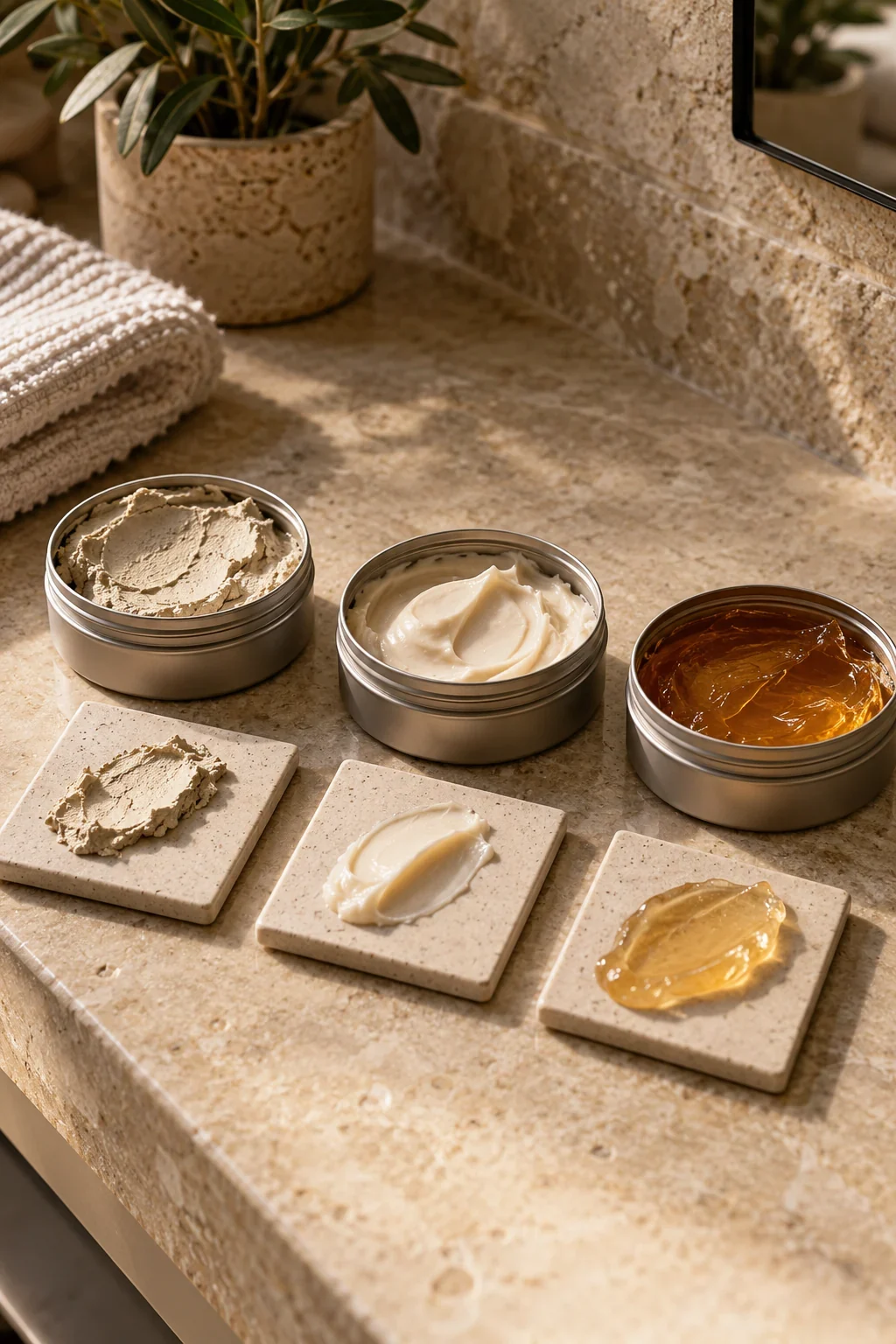
Clay, wax and pomade are useful shopping labels, but they are not precise performance standards. A formula can combine several types of ingredients, and two products with the same label can feel very different.
Choose by the result you want—dry texture, flexible separation or a smoother finish—and check the individual product description. This is a selection guide, not a tested ranking of brands.
Read beyond the name on the tin
Clay-labeled products often aim for a drier-looking textured finish. Waxes often emphasize separation and reshaping. Pomades commonly offer controlled, smoother styling, with shine and washout varying by formula. These are tendencies, not promises about every product.
Compare the maker’s finish, hold and application instructions side by side. A “matte pomade” and a “clay pomade” may overlap more than their names suggest, while two waxes may differ substantially.
For a matte textured crop
If your goal is visible separation without much sheen, start with a product described as matte or low-shine. Work a very small amount evenly through your hands, then apply according to the label. Add more only after checking the shape in daylight.
Fine hair may look coated sooner than dense hair, and a heavy dose can collapse the movement you wanted. If the finish feels sticky or dusty, reduce the amount before deciding you need a different category of product.

For a smoother side part
A side part can benefit from a formula that allows strands to sit together with some control. Choose the shine level deliberately: a restrained sheen and a wet-looking finish are different outcomes. Use a comb only after the product is distributed rather than concentrating it in one stripe.
Check whether the formula is intended for damp or dry application. Water-based and oil-based descriptions can help frame the washout question, but the full formula and your washing routine determine the experience.

Match the product to your everyday routine
Ask four questions before buying: How shiny should the hair look? How much movement should remain? Will I restyle it during the day? How easily do I want it to rinse or shampoo out? Then compare only products that fit those priorities.
For a wavy two-block or longer layered cut, avoiding unnecessary weight may matter more than maximum advertised hold. For a compact side part, control may matter more than a very dry finish. Neither goal requires one compulsory ingredient.
Run a simple one-product trial
Use the same haircut, similar starting moisture and a small measured amount for your first few attempts. Change one thing at a time—amount or application stage—so you can identify what helped. Note the appearance after styling, later in the day and after washing.
Keep product off irritated skin and follow label instructions. If a product causes discomfort, stop using it. A travel size or sample can make sense when available; a large tub is not better value if the finish does not suit you.
Frequently Asked Questions
Is clay always stronger than wax?
No. Hold depends on the specific formula, amount and hair. The category name alone cannot rank performance.
Does pomade always look wet?
No. Pomades range from matte to high-shine finishes. Check the product’s description and application instructions.
Can I combine products?
You can experiment, but begin with one product so you understand its behavior. Mixing can change the finish, weight and ease of washing.
 Beard Fade Guide: Short, Medium and Full Beard Options
 Italian Beard Fade: How to Explain the Shape to Your Barber
 Korean Two-Block Haircut: Straight and Wavy Hair Guide