 by Ecrin Labs
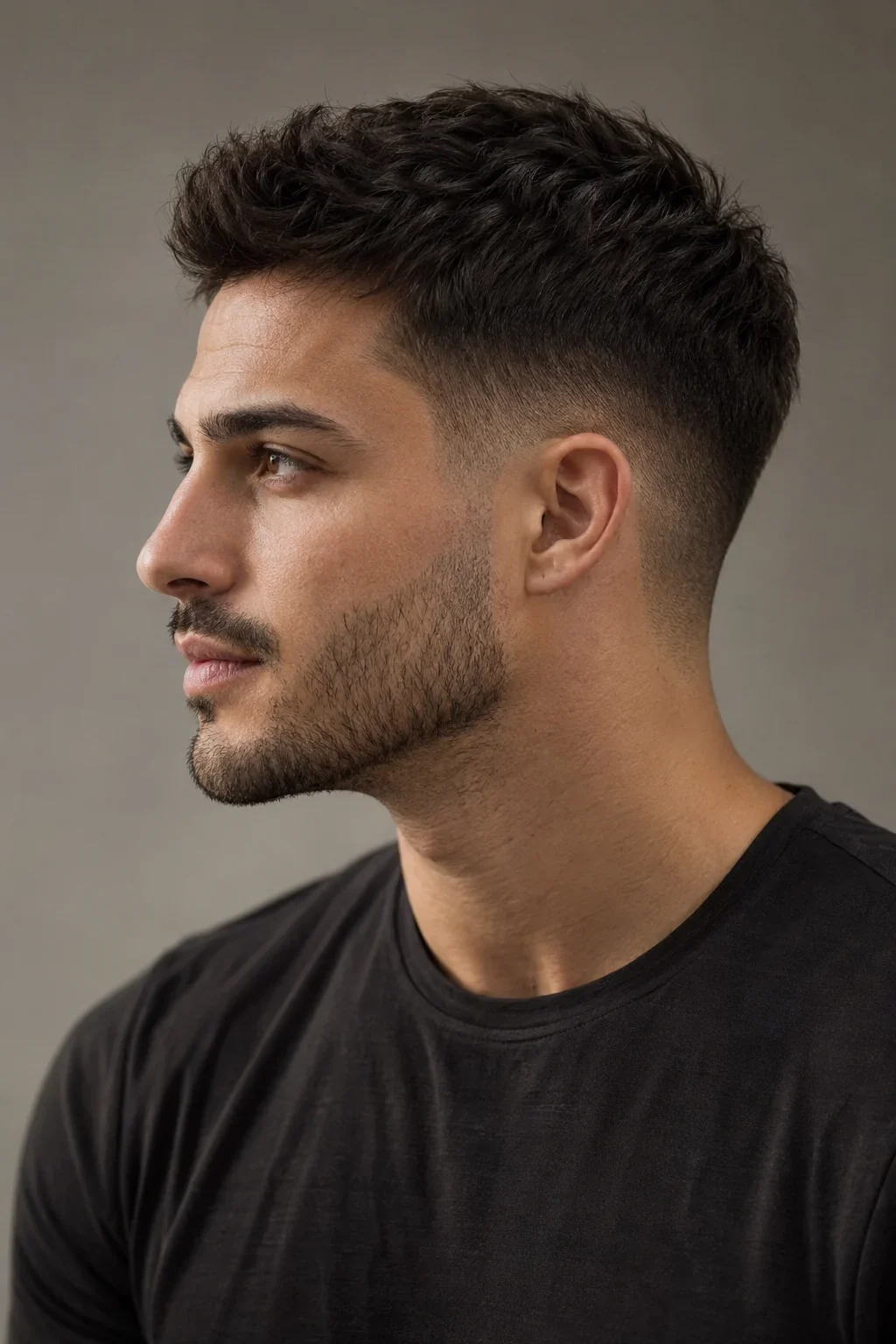
A two-block haircut keeps a longer upper section above shorter sides and back. The contrast can be obvious or gently softened. The name does not specify one fringe length, parting or exact clipper setting.
Start with how your hair behaves without styling. Straight hair, natural waves, density and growth direction all change the silhouette. These illustrations help separate the cut from the finish added afterward.
Straight hair with a rounded top
A longer top can fall into a smooth, rounded outline on straight hair. Decide whether you want the fringe near the brows, swept aside or separated by a part. Ask the stylist to check the front in its natural fall before removing length.
Hair that sticks outward at the sides may need a different length or transition from the reference. Cutting that area very short is not automatically the easiest solution; discuss how it will grow and sit between appointments.
Wavy hair with a softer separation
Natural waves break up the boundary between the upper and lower sections. Retaining enough top length gives the wave room to form, while selective shaping can reduce unwanted bulk. Ask the stylist to judge the dry shape as well as the wet length.
A wavy reference may include heat styling or a perm. Ask whether your hair can produce the pictured movement with the routine you are willing to repeat, rather than assuming the haircut alone creates it.

Check the back and nape
The back view matters because the longer upper section can sit over a short nape in very different ways. Choose whether you prefer a visible weight line, a softer graduation or a closely tapered edge. Show a back-view reference whenever possible.
Ask how the crown will behave when you wake up or let it air-dry. A strong growth pattern can need a little extra length or a different parting to keep the shape manageable.

Build a useful consultation brief
Take front, side and back references that describe the same overall cut. State how much time you spend styling, whether you use a dryer and where you normally part your hair. Discuss the amount of contrast before discussing guard numbers.
Try: “I want a longer top over shorter sides, with a soft transition rather than a pronounced shelf. Keep enough fringe to part it, and show me how the crown will sit without a salon blow-dry.”
Style the shape you actually have
Start with a small amount of product and distribute it through your hands before touching the hair. Place the part first, then shape the ends rather than flattening the roots with a large dose. A light finish may preserve movement better than a heavy coating, but formulas vary.
If you use heat, follow the tool and heat-protection product instructions. Photograph your own successful everyday finish so you can explain what worked at the next cut.
Frequently Asked Questions
Do I need straight hair?
No. Wavy hair can suit a two-block structure, but the transition and top length need to account for its movement.
Is a two-block the same as an undercut?
The terms can overlap. A two-block reference often emphasizes a longer upper shape above shorter sides; show the separation you want instead of relying on the name alone.
Will the haircut create a middle part?
It can support one, but growth direction and styling matter. Ask your stylist to test the part before finalizing the fringe.
 Beard Fade Guide: Short, Medium and Full Beard Options
 Italian Beard Fade: How to Explain the Shape to Your Barber
 Loose Wavy Perm for Men: A Consultation and Styling Guide