 by Ecrin Labs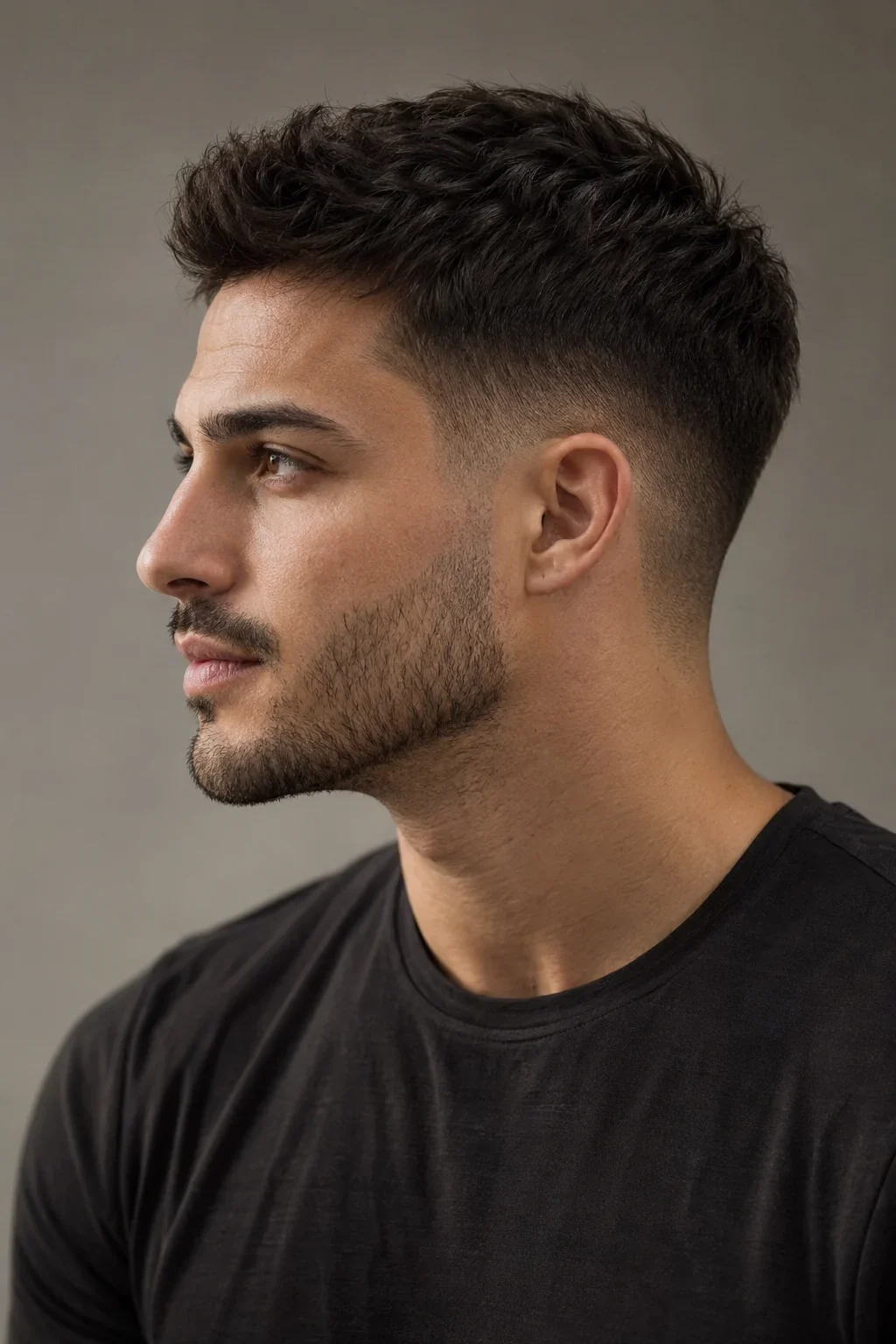
A beard fade is a gradual change in length, usually around the sideburn, that connects the haircut to the beard. The position of that transition matters as much as the overall beard length. A low, subtle blend can keep a full beard looking full; a higher transition can expose more of the cheek.
Use these illustrations to discuss shape with your barber. They are visual concepts, not before-and-after results or promises about how a cut will look on your growth pattern.
Short beard, quiet transition
A short beard benefits from a transition that does not remove its strongest areas. Ask to keep visible coverage along the jaw and soften the sideburn rather than taking a wide strip down to skin. If your cheek growth is sparse, preserving the natural line may make more sense than carving a high, sharp edge.
Bring a side-view photograph showing the amount of skin you want visible. Explain whether you like a soft finish or a precise outline; those are separate decisions from the fade itself.
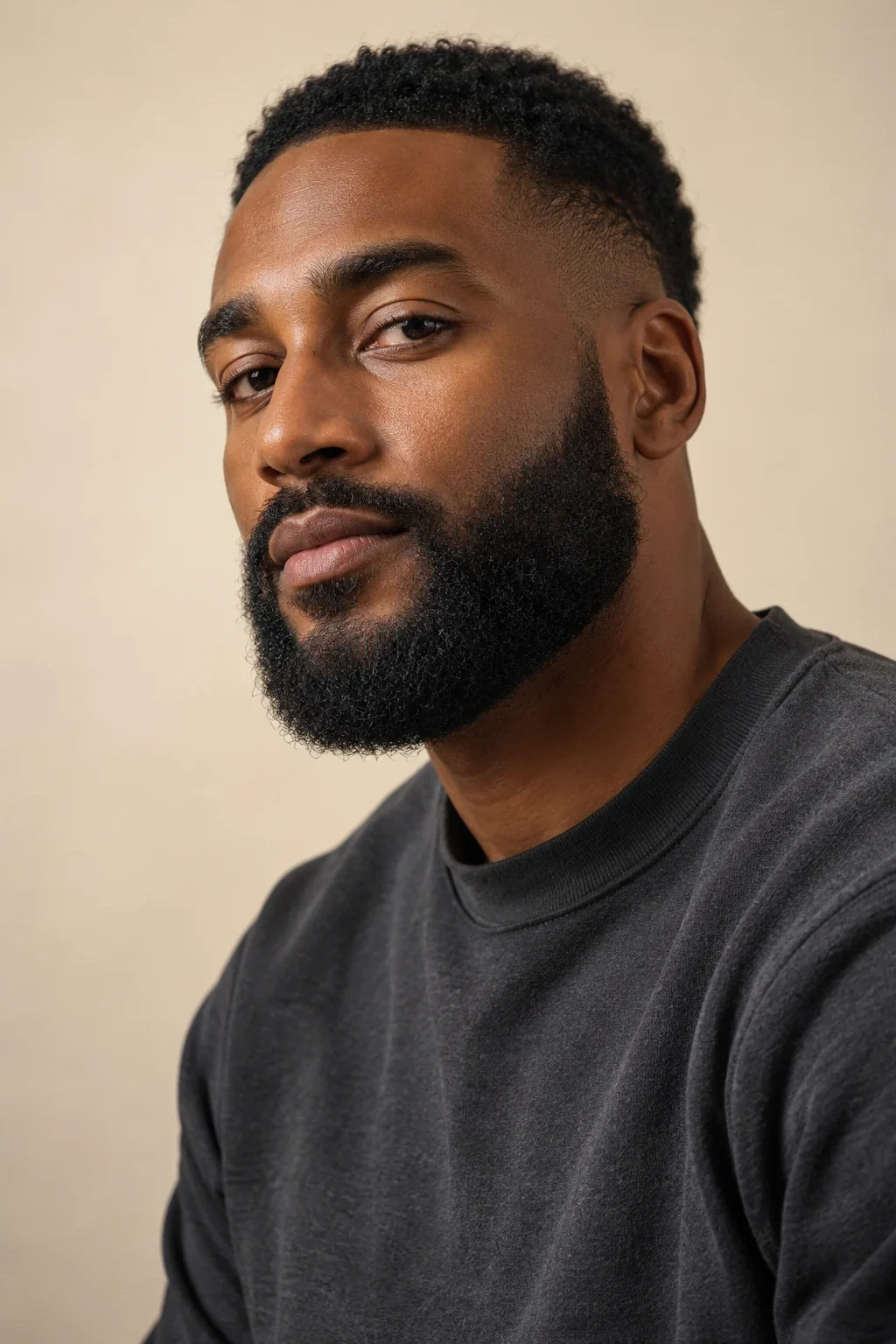
Medium beard, balanced sides
With a medium beard, decide how much width to retain beside the mouth before choosing the fade height. A compact sideburn and fuller lower beard can create a deliberate shape without aggressively thinning the cheek. Ask your barber to show you the outline from the front and both sides before shortening the body.
Growth often differs across the face. Matching the visual outline may require different adjustments on each side rather than identical clipper settings.
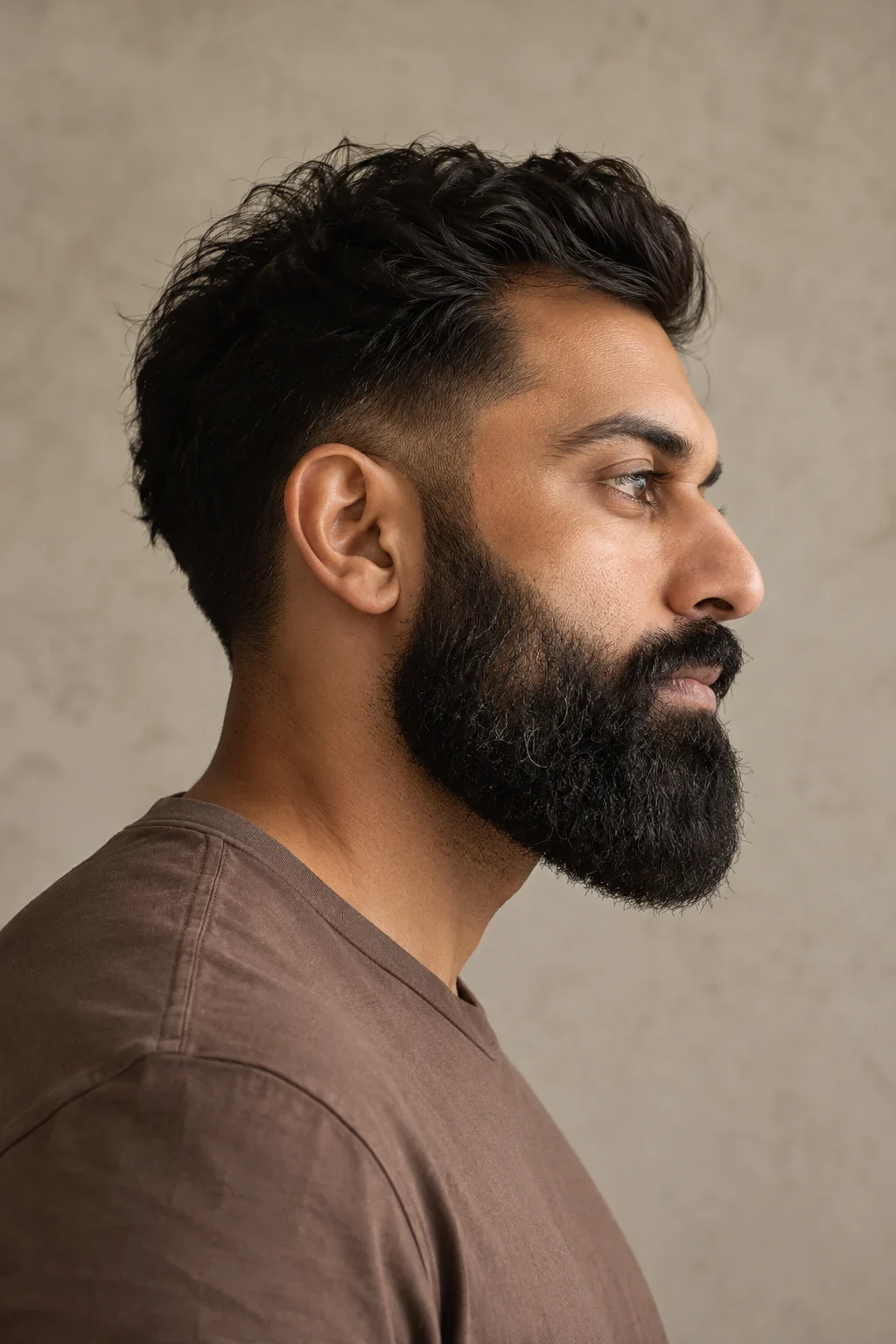
Full beard, preserved weight
For a longer beard, place the emphasis on connecting the sideburn while retaining the weight below. Choose a rounded, squared or gently tapered lower outline according to your preference and actual density. Do not assume that a full beard needs an especially high fade.
Comb the beard into its ordinary resting position before discussing the cut. A shape that only looks even when pulled straight may be harder to reproduce during your daily routine.
What to say in the barber chair
Try: “Keep the fullness along my jaw, make the transition low around the sideburn, and show me where the cheek and neckline will sit before outlining.” Add whether the mustache should connect and how much lip coverage you want. Bring one preferred reference and one example that feels too short.
Guard numbers are not a universal design language: tool systems and technique vary. Photos, transition placement and retained length communicate the result more reliably than requesting one number for the whole beard.
Make upkeep part of the choice
Ask which areas you can tidy between appointments and which should wait for the next blend. At home, comb first and remove only obvious stray ends if you are comfortable doing so. Repeatedly chasing the fade upward can gradually remove the shape you wanted to keep.
Choose the next appointment based on how quickly the transition loses definition for you. A softer blend tolerates visible growth differently from a skin-level finish; no single schedule suits every beard.
Frequently Asked Questions
Can a patchy beard have a fade?
Sometimes. The transition should work around stronger and weaker growth. Ask a barber whether retaining more cheek coverage would produce a more balanced result.
Does a beard fade require a skin fade haircut?
No. It can connect to longer sides or a taper. Show the barber how you want the haircut and beard to meet.
Which length is easiest to maintain?
The easiest option depends on your growth and expectations. A subtle transition usually requires less precision to keep looking intentional than a very sharp contrast.
 Italian Beard Fade: How to Explain the Shape to Your Barber
 Korean Two-Block Haircut: Straight and Wavy Hair Guide
 Loose Wavy Perm for Men: A Consultation and Styling Guide