 by Ecrin Labs
“Italian beard fade” is a useful search phrase, but it is not a standardized barber specification. References often show a controlled sideburn transition, a tidy mustache and a deliberately shaped short beard. Different barbers may interpret the label differently.
The practical approach is to describe the parts of the look you like. The illustrations show three possible directions, and none depends on having a particular nationality or hair texture.
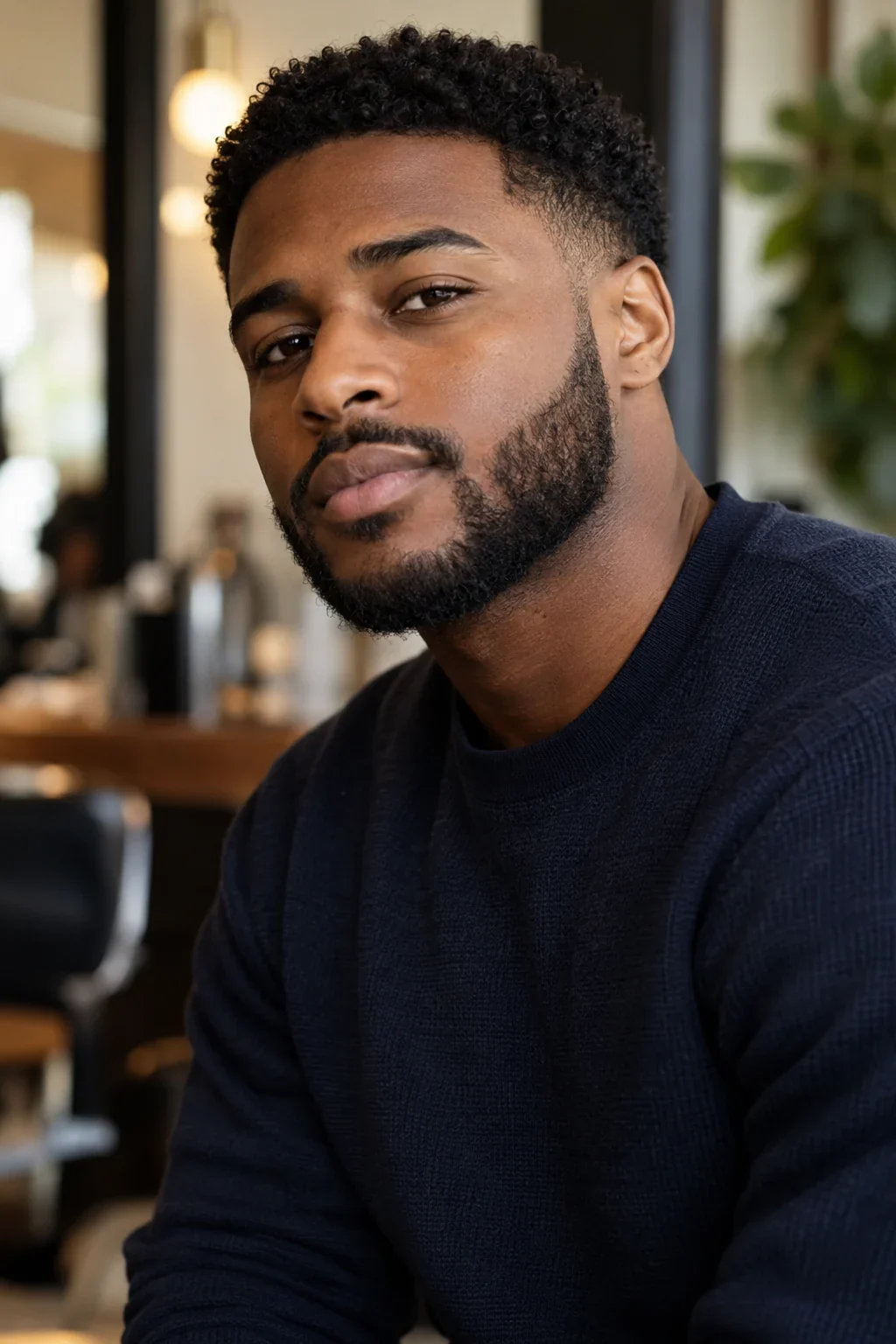
Short beard with a low blend
This version keeps the transition close to the sideburn and leaves enough beard along the jaw to read as a continuous shape. A natural cheek line makes the finish softer than a heavily drawn outline. Ask for the fade position first, then discuss how much bulk should remain around the chin.
If your chosen photograph shows unusually dense coverage, explain that you want its overall shape rather than expecting your beard to reproduce every edge.
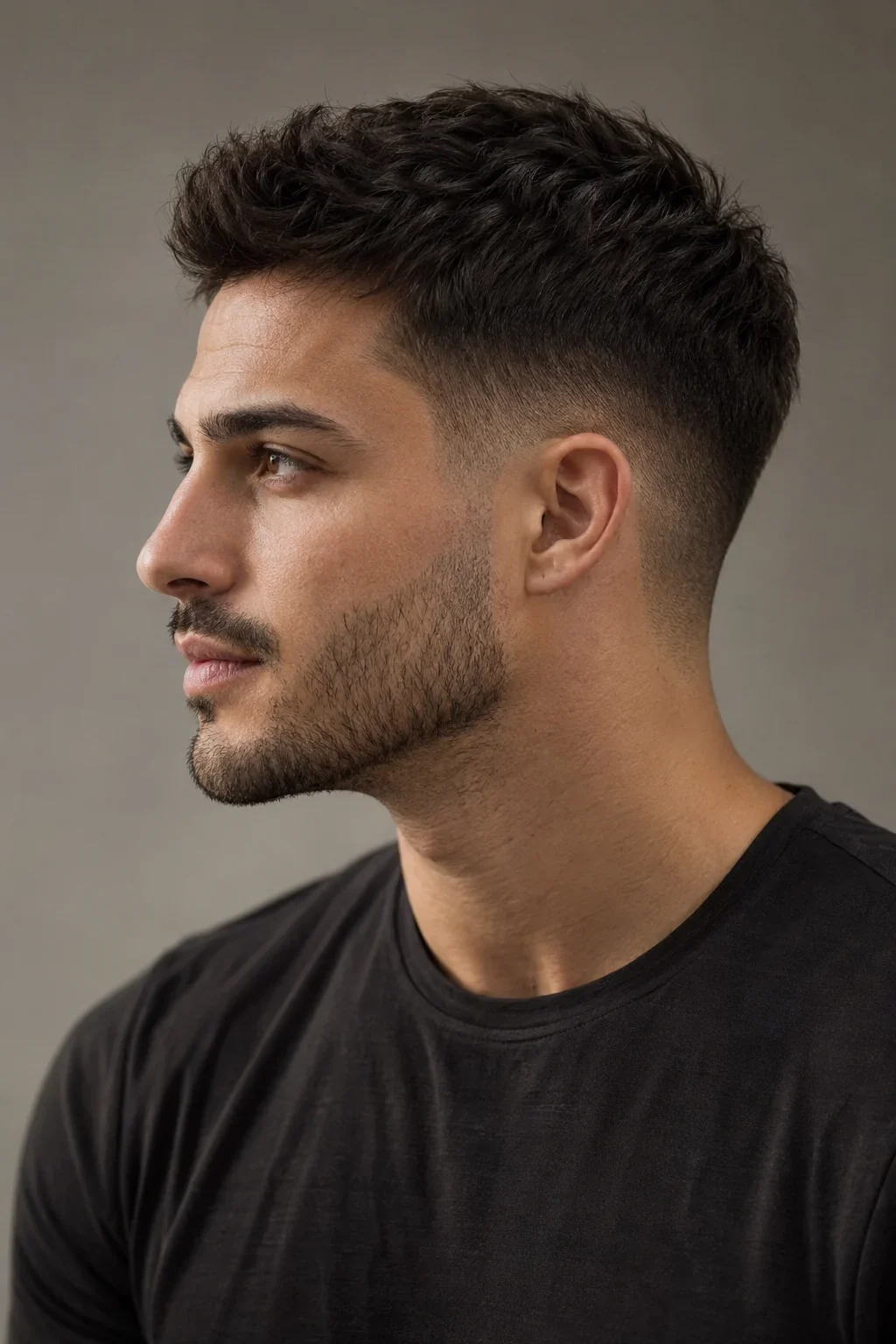
Swept-back hair and a connected mustache
A brushed-back haircut makes the sideburn connection especially visible. Keep the mustache connection as a separate choice: you may prefer a continuous line into the beard or a little separation around the mouth. Ask your barber to preserve whichever areas provide the coverage you enjoy.
Check the beard when speaking and smiling as well as at rest. Lip coverage and the corners of the mouth affect everyday comfort, even if the outline looks excellent in a still photograph.

Curly crop with a rounded lower outline
The same tidy concept can work with a curly crop and a short, rounded beard. The goal is a clear connection between the sides and the beard, with enough weight below to keep the silhouette coherent. The curl pattern on top does not dictate one required beard shape.
View the result head-on. A side photograph can show the fade beautifully while hiding unwanted width or an uneven lower edge.
Translate the reference into four decisions
Before the appointment, decide where the blend starts, whether the cheek line stays natural, how the mustache connects, and whether the bottom is rounded or more angular. These four decisions make a broad style label actionable.
Say: “I like the compact sideburn and short rounded beard in this reference. Keep my natural cheek line and connected mustache; please show me the proposed bottom outline before removing length.” Adjust those details to your own preference.
Keep the finish realistic between visits
Ask your barber to demonstrate the direction to comb and which perimeter hairs can be left alone. Use a small amount of a beard product only if you like its feel; a shiny finish is not a requirement of this style. Follow the product label and avoid applying it to irritated skin.
A clean outline will soften as hair grows. Decide whether that softer phase suits you before choosing an appointment frequency. Photograph the finished cut from the front and side for your next consultation.
Frequently Asked Questions
Is an Italian beard fade a separate cutting technique?
The name is not standardized. It usually describes a styling direction; specify the transition and outline with reference photos.
Does it need a sharp cheek line?
No. A natural cheek line can work with a controlled sideburn blend. Choose the amount of definition you actually want to maintain.
Can it work with curly hair?
Yes, the haircut and beard can be adapted independently. Your barber should assess the density and direction of beard growth.
 Beard Fade Guide: Short, Medium and Full Beard Options
 Korean Two-Block Haircut: Straight and Wavy Hair Guide
 Loose Wavy Perm for Men: A Consultation and Styling Guide