 by Ecrin Labs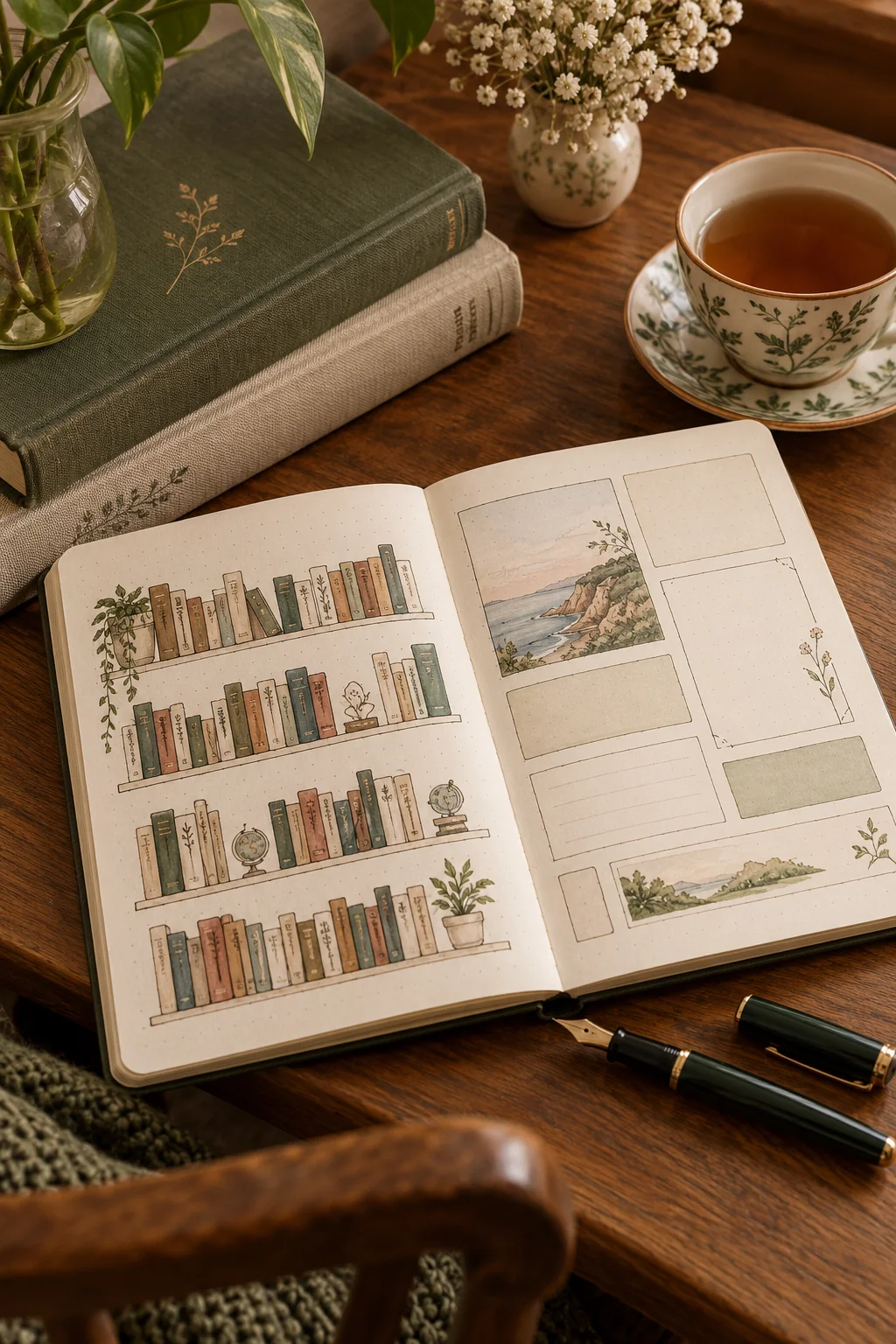
A reading journal can hold the things a book leaves behind: a question, a setting, a favorite character or a recommendation you want to revisit. It does not need to turn reading into a competition. Choose pages that help you remember your own experience.
Start with a notebook you already have. A plain book log plus one thoughtful note per finished book can be more useful than an elaborate spread you never complete.
Give every book the same small starting point
Record the title, author and the date you began. Add the format if you use a mixture of print, ebooks and audiobooks. Leave space for the finish date, but do not decide in advance that every started book must be completed.
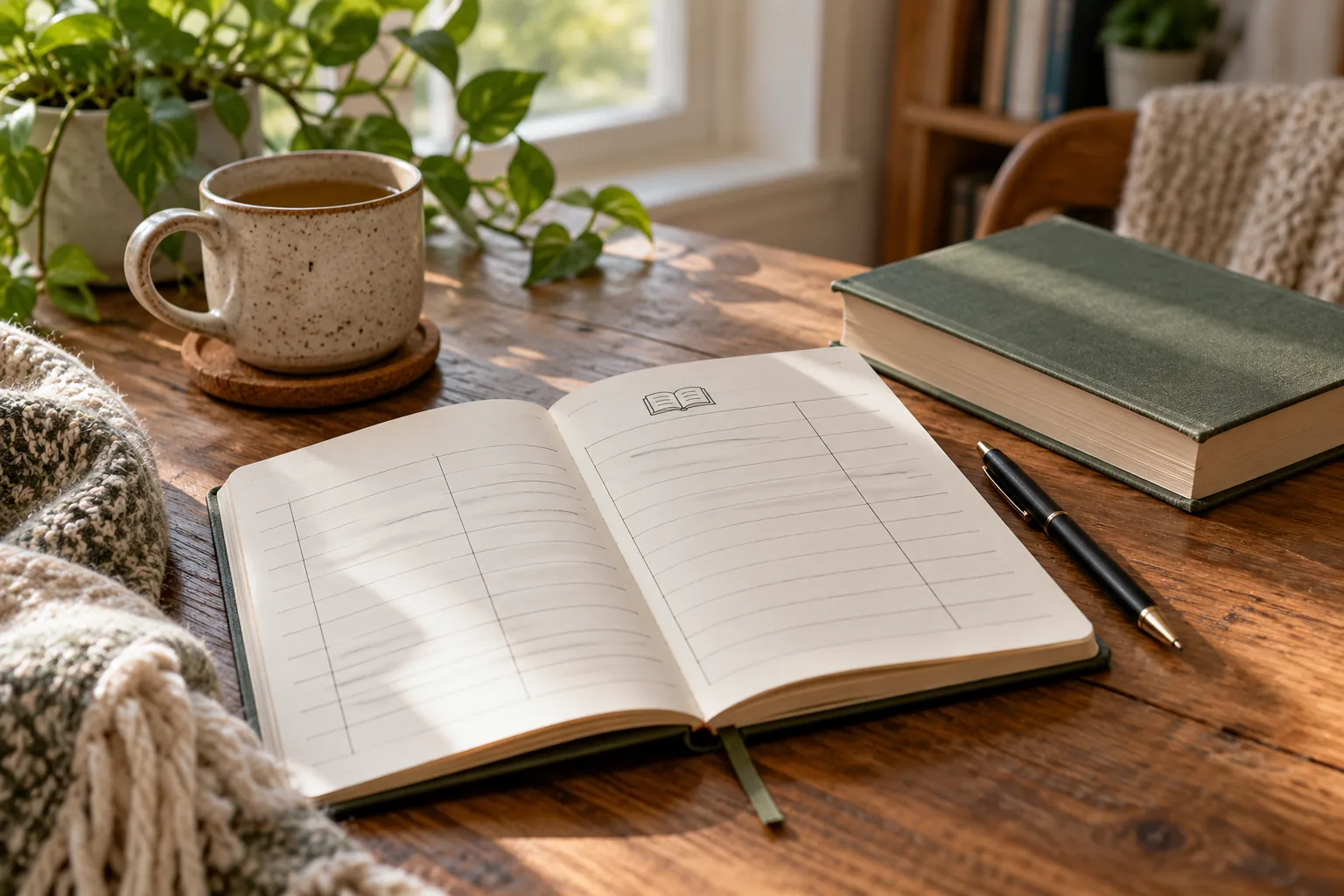
Create a short review box with three prompts: what stayed with me, who might enjoy it, and what I want to read next. A sentence for each is enough. Use page numbers for references so a note is easier to find later.
Fifteen pages to mix and match
1. Plain book log: one line per book with title, author and finish date. Keep it at the front as a reliable index.
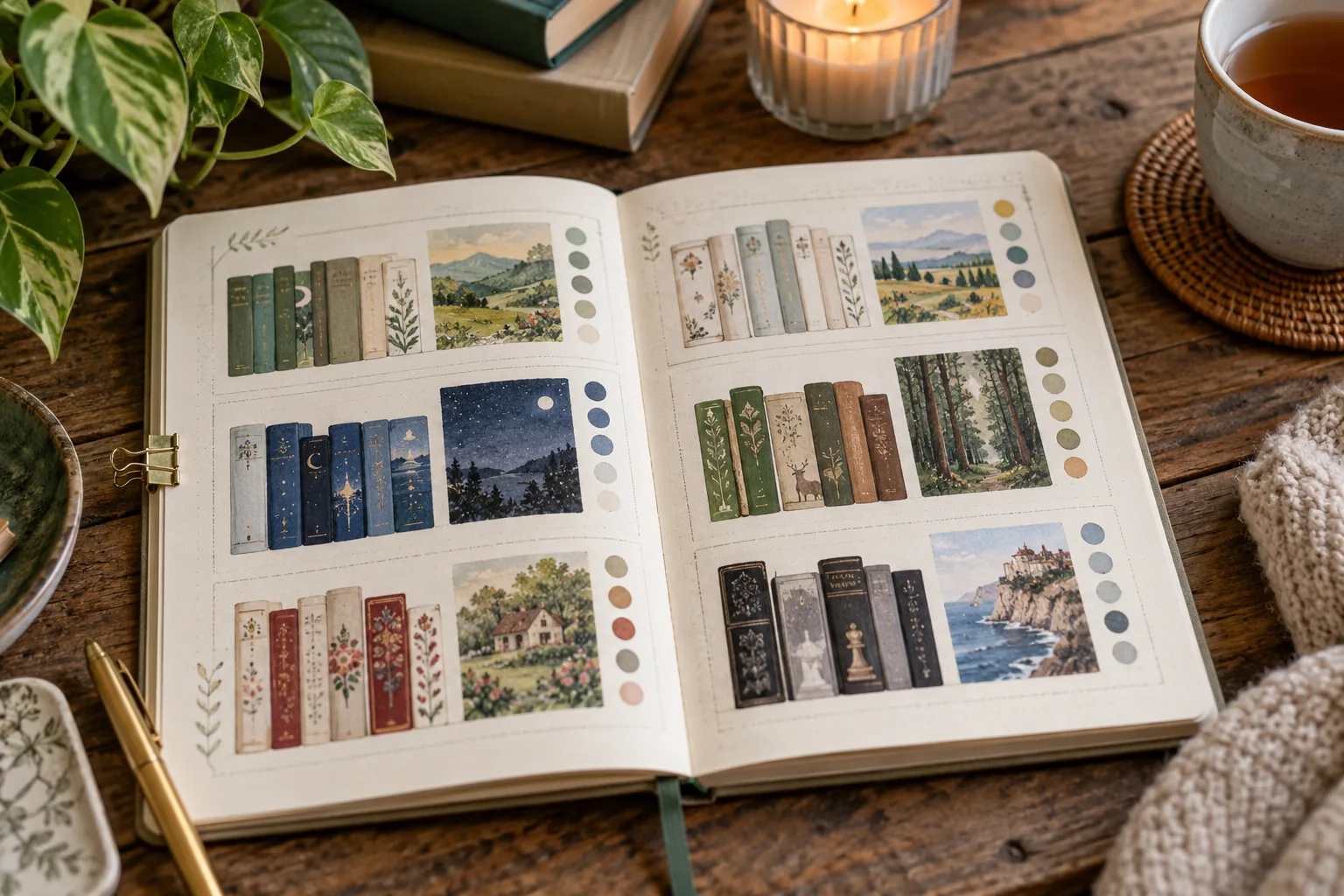
2. Drawn bookshelf: add a small spine when you finish a book. Choose colors by genre or by mood, but define the key once.
3. Monthly reading page: record what you read this month with room for unfinished titles. Avoid treating the month boundary as a deadline.
4. One-page review: reserve space for your own reaction rather than retelling the whole plot. Add a spoiler note when necessary.
5. Favorite settings map: sketch places from different stories on separate small panels. Mark which details come from the text and which you imagined.
6. Character notes: give each important character a name and a short relationship note. This helps when returning to a long series.
7. Genre sampler: leave a row for genres you want to explore. Fill it after reading rather than choosing a quota for every category.
8. Recommendation list: note who suggested each book and why. It adds context that a title-only wishlist can lose.
9. Library borrowing page: record due dates and renewal checks. Keep personal account details out of journal photographs you share.
10. Series tracker: list books in publication or reading order. Include space for rereads without overwriting the first date.
11. Author discovery page: gather titles by one author alongside your own impressions. Do not assume all their books share the same tone.
12. Reading-session notes: jot a page reference and one question after a session. Use it only for books that benefit from closer attention.
13. Book-club page: keep questions separate from the group’s discussion notes. Add a date so later reflections do not blur together.
14. Abandoned-book note: write why you stopped and whether you might return. Leaving a book can still produce a useful observation.
15. Year-end favorites: select a small set and explain each choice. Your reasons make the page more personal than a rating alone.
Keep the journal easy to maintain
Choose one core log and two optional layouts for the first month. Pencil in the page headings before decorating, and reserve a few blank pages between recurring sections. If you run out of room, continue on another page and add its number to the index.
When photographing a spread, cover private borrowing information and use short references rather than reproducing long passages from a book. The cover illustration suggests a visual style; it is not a printable journal template.

Frequently Asked Questions
Do I need star ratings?
No. A sentence about your reaction can replace a numeric score.
Can I log audiobooks?
Yes. Recording the format can help you remember how you experienced the book.
Should unfinished books count?
Include them if they matter to you, with a clear note that they were not finished.
 12 Minimal Habit Tracker Ideas for a Bullet Journal
 9 Handmade Ceramic Serving Platter Ideas
 10 Paper Blind Bag Ideas to Make at Home