 by Ecrin Labs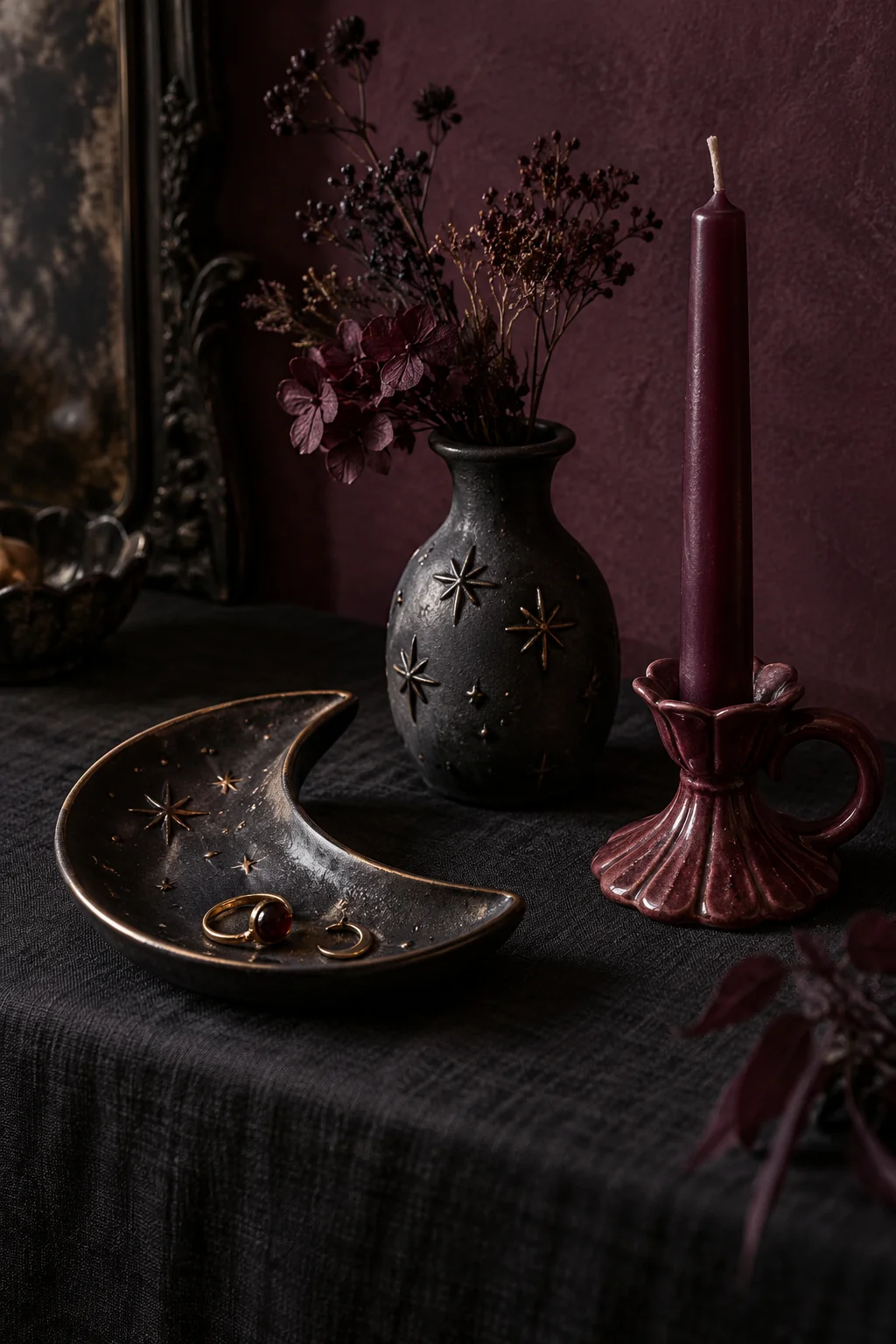
Gothic pottery does not have to cover every surface in symbols. A dark glaze, an arched outline or one subtle relief detail can give a shelf a distinctive atmosphere. Start with a single useful silhouette and let texture provide the drama.
The ideas below are decorative design briefs. Choose materials for their actual purpose: air-dry clay can suit decorative objects, while vessels for water, food or heat need an appropriate process and confirmation of suitability.
Pick the function and material first
Decide whether the piece will hold dry jewelry, display dried flowers or simply stand on a shelf. That choice determines what you can realistically make at home. An air-dry clay vase sleeve can surround a separate watertight vessel; it should not be assumed watertight itself.
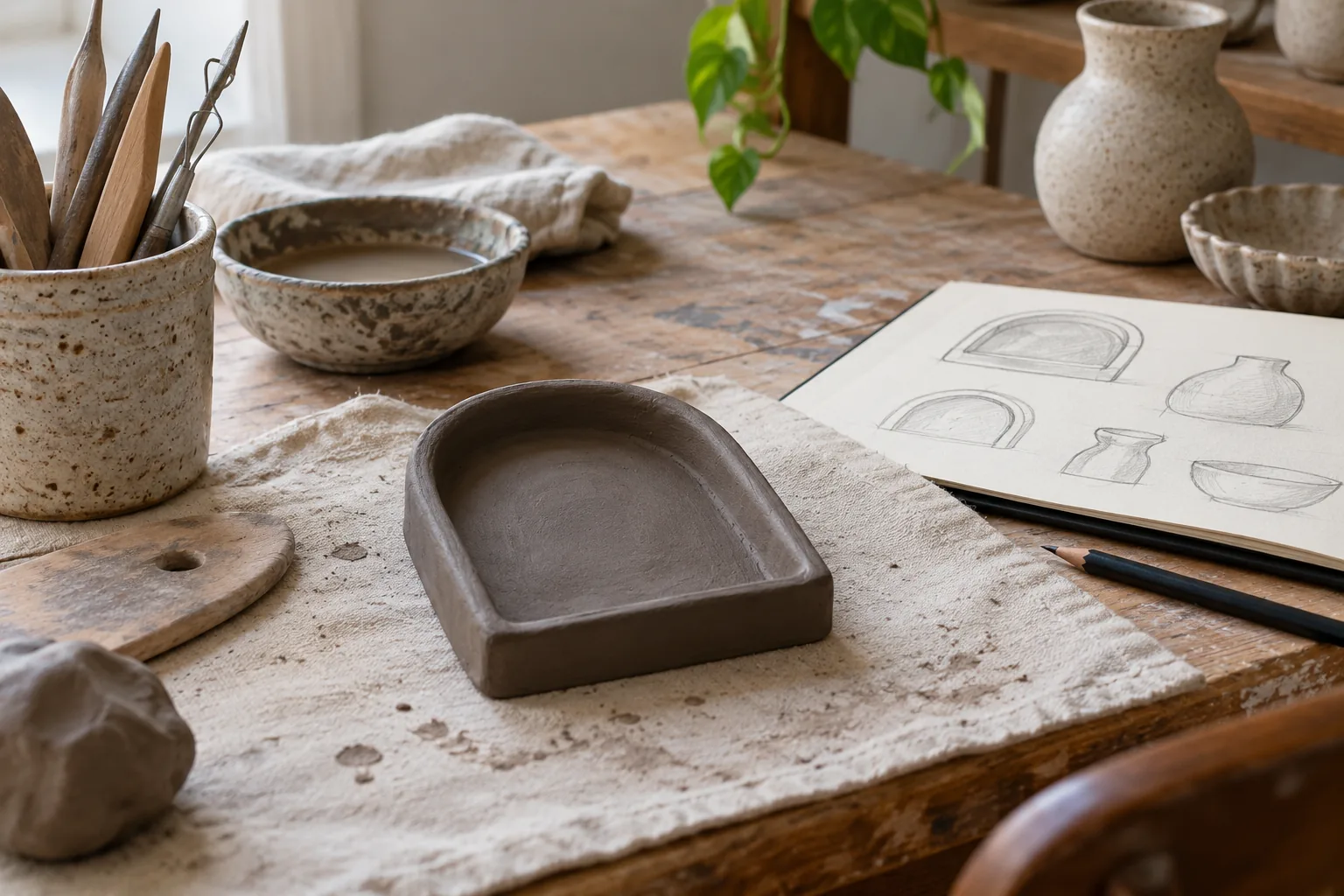
Sketch the base as well as the front. A narrow or top-heavy piece can look beautiful in a photo but be awkward on a shelf. For fired ceramics, discuss the clay and finish with a studio before adding thin handles or tall necks.
Twelve designs with one main detail each
1. Crescent trinket dish: use a broad moon shape with rounded points. A shallow center is enough for a ring or small dry keepsake.
2. Arched ornament: a freestanding arch with a flat base. Keep the opening wide so the silhouette reads clearly.
3. Embossed-star vase sleeve: add a few shallow stars to a simple cylinder. Use a separate inner container for water.
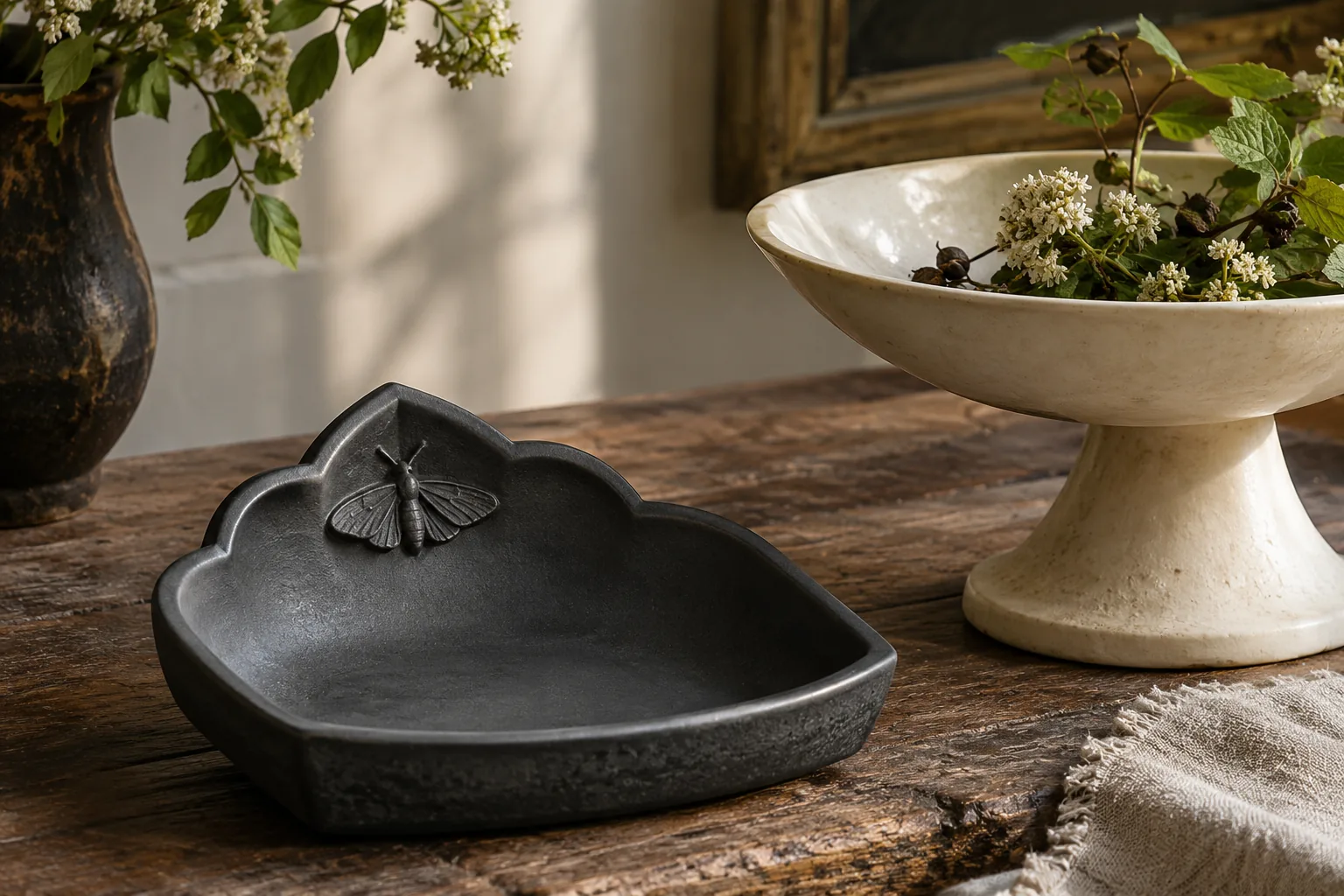
4. Dark scalloped tray: repeat one gentle curve around the rim. Leave the central surface plain so it remains easy to dust.
5. Rose-relief tile: press or model a simplified flower on a flat plaque. Let the petals stay thick enough for the chosen material.
6. Tiny book-shaped box: use a rectangular lid with a restrained spine detail. Check that lid and base dry or fire with suitable clearance.
7. Plum and charcoal pair: make two similar silhouettes in different finishes. Their relationship can carry the whole display.
8. Pointed-window plaque: use a flat arched panel rather than a tall delicate frame. Add a simple internal line pattern.
9. Matte pebble vessels: group three small dry decorative forms. Vary height while keeping their bases broad.
10. Thorn-inspired border: suggest a branch with rounded relief marks. Avoid sharp projections where hands will touch the piece.
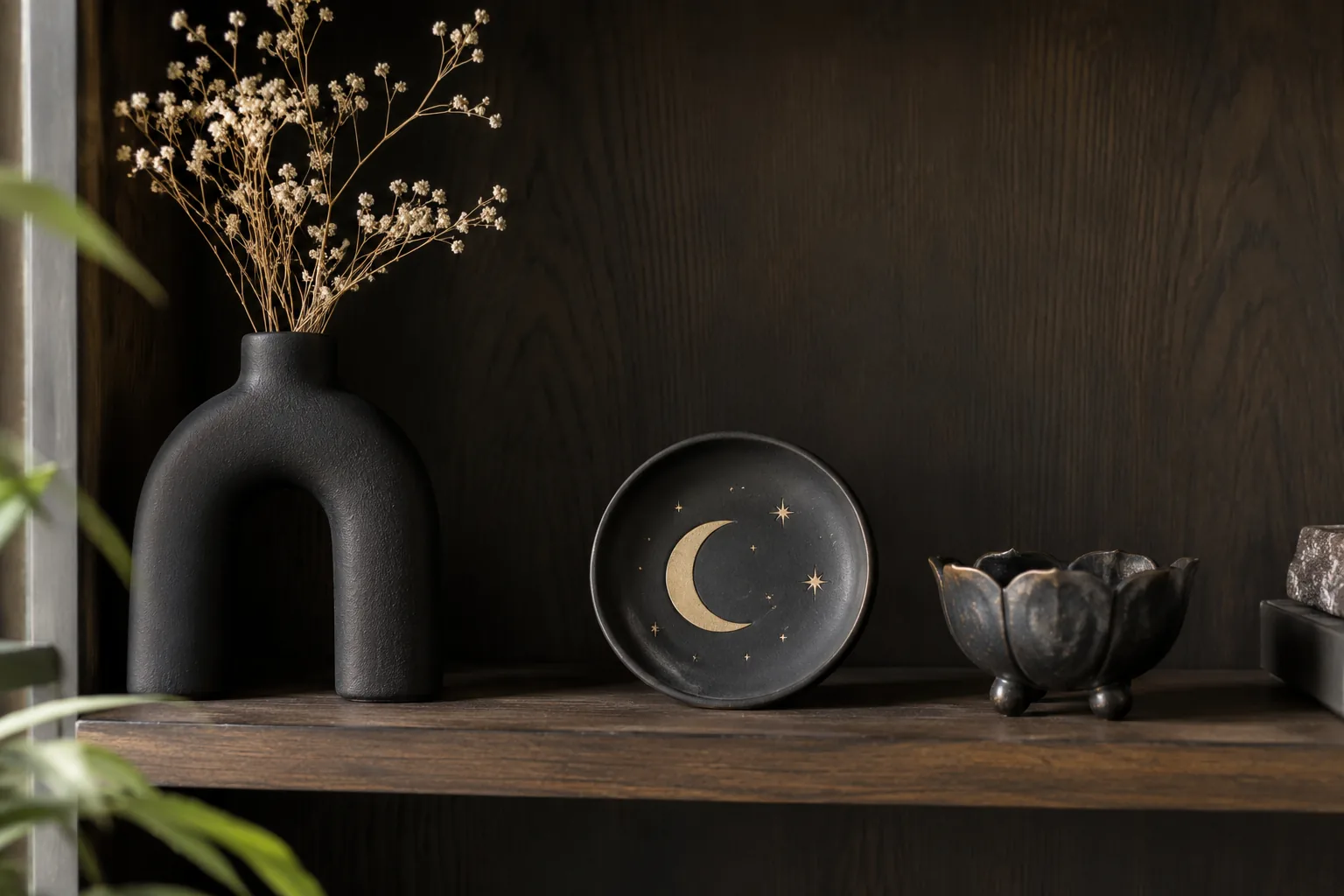
11. Celestial wall tile: use a moon and a few recessed dots. Plan an appropriate hanging method before finishing it.
12. Unlit candle display: place an unlit candle in a stable decorative arrangement. For burning candles, use a purpose-made suitable holder.
Style the finished pieces without crowding
Try one dark piece against a light wall or a small group against a muted plum backdrop. Leave enough room around the edges to pick each piece up safely. Keep dried stems short enough that they do not pull a light container off balance.
For a beginner, choose a trinket dish or flat ornament first. Follow the clay and finish instructions for thickness, drying and use. The illustrated candle is a styling prop, not evidence that the pictured handmade holder is heat-safe.
Frequently Asked Questions
Can I use air-dry clay?
For appropriate dry decorative projects, yes; follow the material instructions and avoid assuming food, water or heat suitability.
What makes the design gothic?
Dark finishes, arched silhouettes and restrained botanical or celestial details can establish the style.
Can I burn a candle in any handmade holder?
No. Use a holder intended and suitable for burning candles, with its supplied instructions.
 12 Minimal Habit Tracker Ideas for a Bullet Journal
 9 Handmade Ceramic Serving Platter Ideas
 10 Paper Blind Bag Ideas to Make at Home