 by Ecrin Labs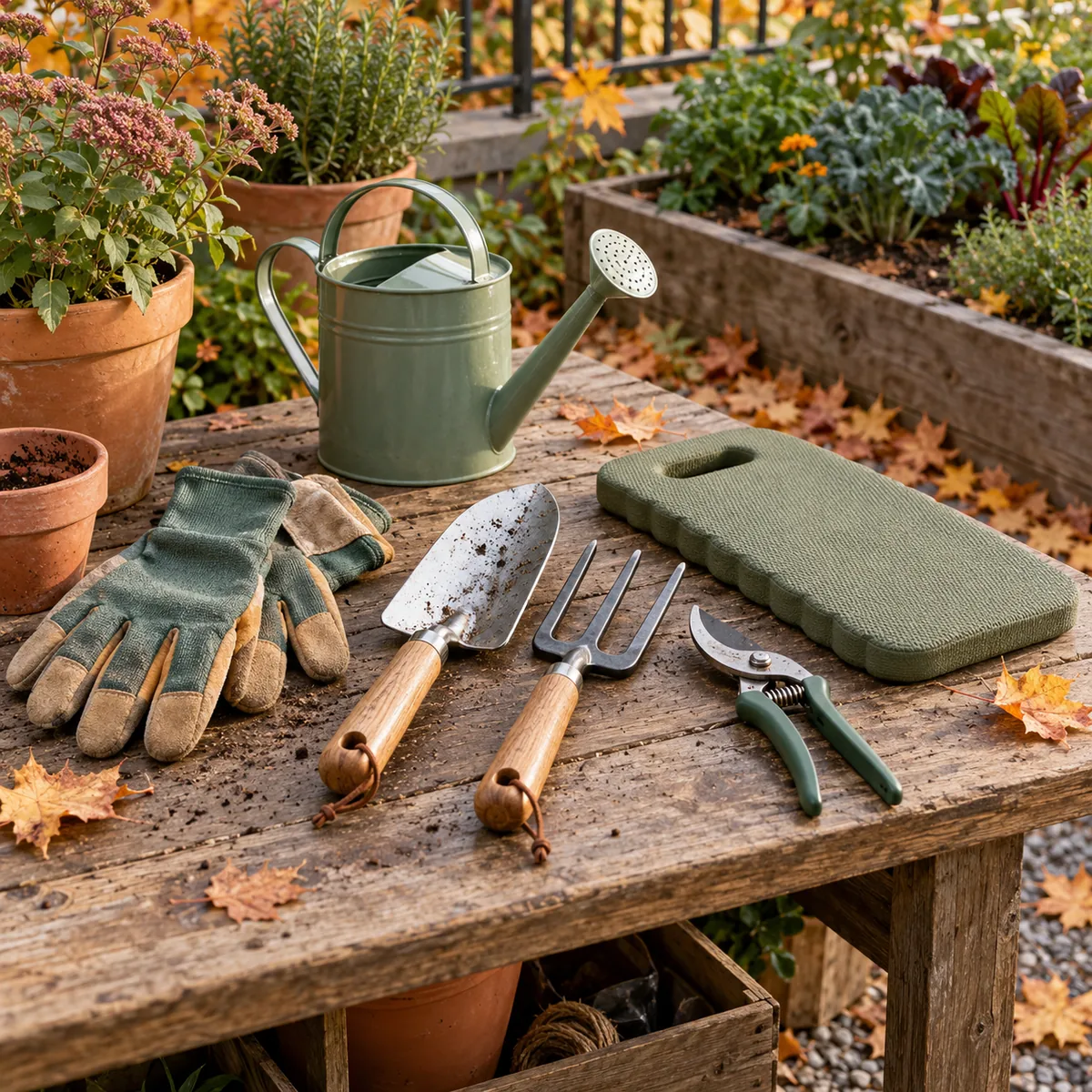
A small garden does not need a crowded shed. For containers, a balcony bed or a modest raised bed, a few well-chosen hand tools can handle planting, loosening soil, light pruning, watering and cleanup. The useful question is not how many tools you can collect, but which jobs you repeat and which tool makes each job easier.
Pinterest Trends currently lists gardening tools among rising United States shopping categories, measured by outbound clicks rather than searches or Pin saves. This guide turns that broad shopping signal into a practical starter kit. It does not recommend a particular brand, and the illustrations show tool types rather than tested products.
Start with a hand trowel and a narrow cultivator
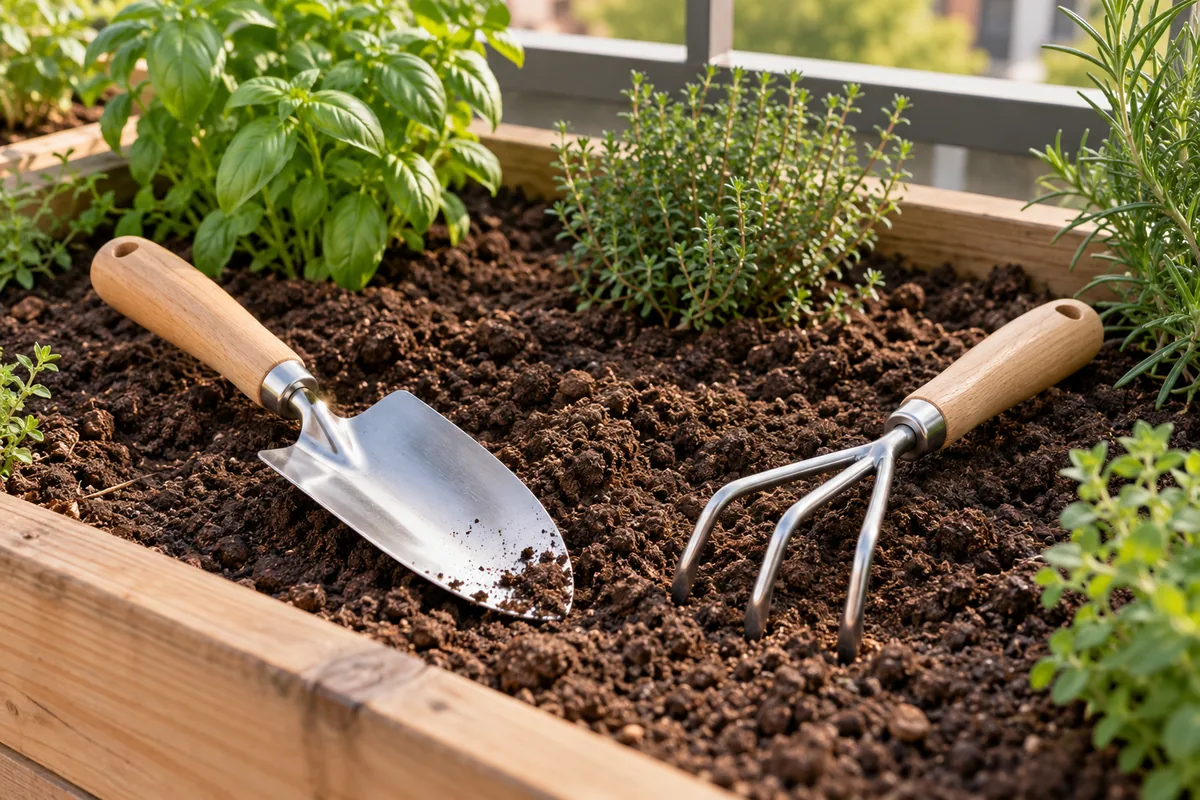
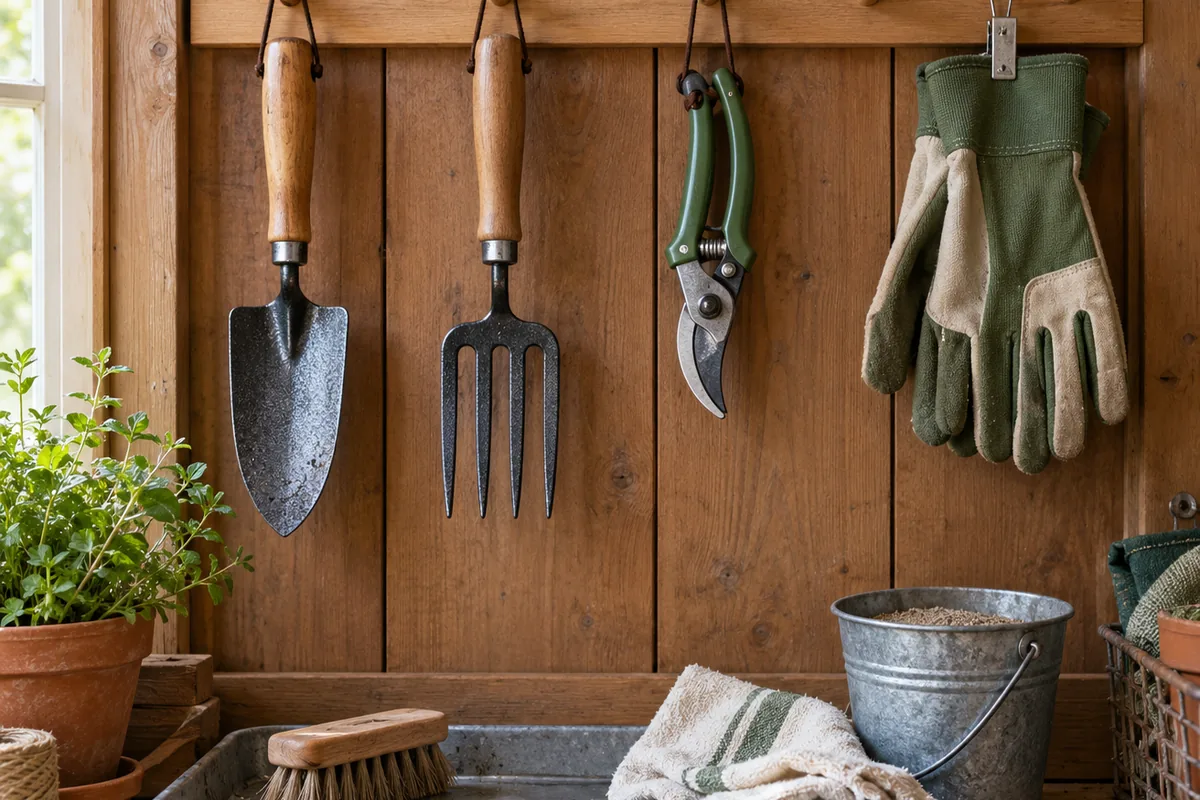
A hand trowel is the most versatile first tool for a compact garden. Use it to open planting holes, move potting mix and lift small plants with a surrounding plug of soil. A blade with a gently pointed tip slips into containers more easily than a very broad scoop. Before buying, hold the tool as if you were digging: your wrist should stay close to straight, and the handle should feel secure without a hard squeeze.
A narrow three-tine cultivator does a different job. It scratches through the top layer of soil, teases apart small clumps and helps work a light layer of compost into an open bed. It is not a substitute for a full-size fork in compacted ground. In pots, keep the tines shallow and work away from established stems so you do not tear through the main root ball.
Look for a strong connection between the metal head and handle. If the tool flexes at that joint in the shop, it is unlikely to improve in use. Measurements stamped on a trowel can be a convenient reference, but they are not a replacement for checking the planting depth a specific plant needs.
Choose bypass pruners for living stems
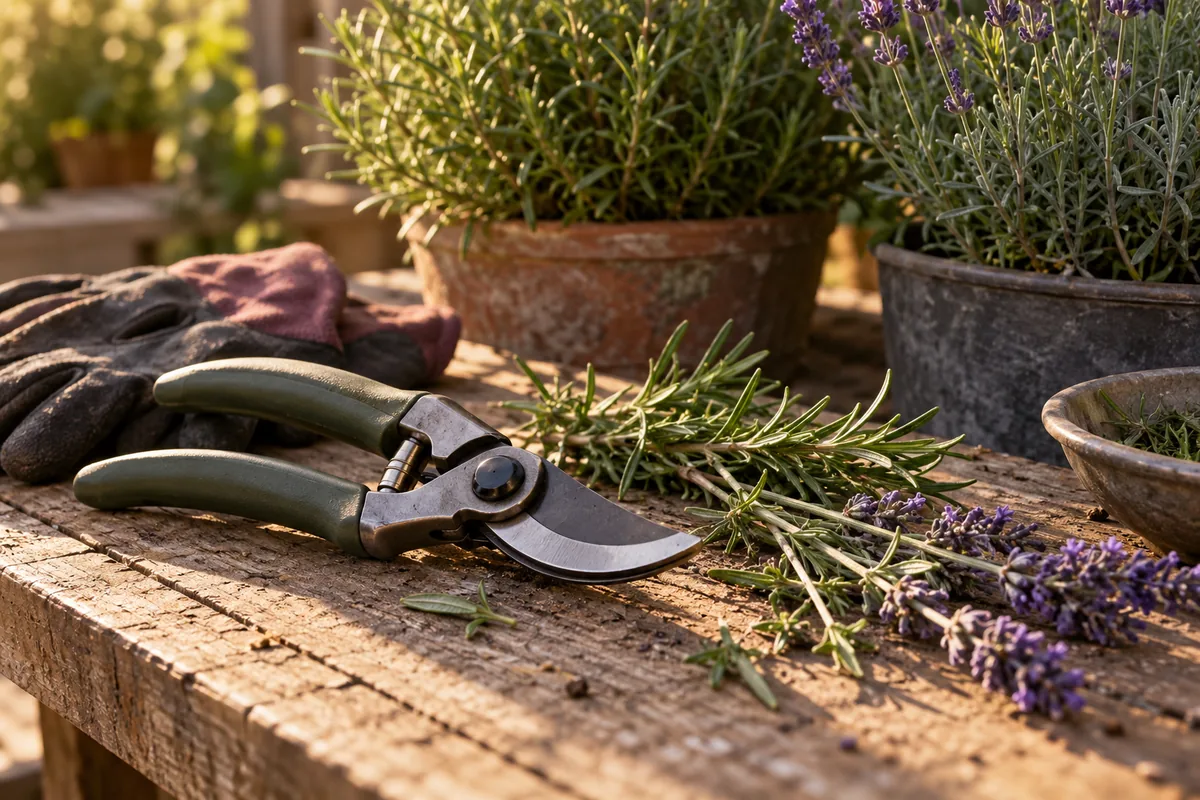
Bypass pruners use two curved blades that pass one another like scissors. They are intended for clean cuts on suitable live stems; an anvil-style tool, which closes one blade onto a flat surface, behaves differently. Check the maker's stated cutting capacity and avoid forcing a stem that is too thick. When a cut needs two hands or repeated twisting, step up to the appropriate larger tool instead of levering the pruners sideways.
Comfort matters because pruning repeats the same grip. Test whether the handles open to a span you can control and whether the lock is easy to operate without putting fingers near the blades. Left-handed gardeners may prefer a genuinely left-handed or ambidextrous design. A bright handle is easier to spot when it is set down among leaves.
Wear eye protection when brittle material may spring or splinter, keep your free hand clear of the cutting path and close the lock before carrying or storing the tool. For plant-health questions or disease-sensitive pruning, follow guidance for the specific plant and your local growing conditions rather than treating one general rule as universal.
Add controlled watering and basic protection
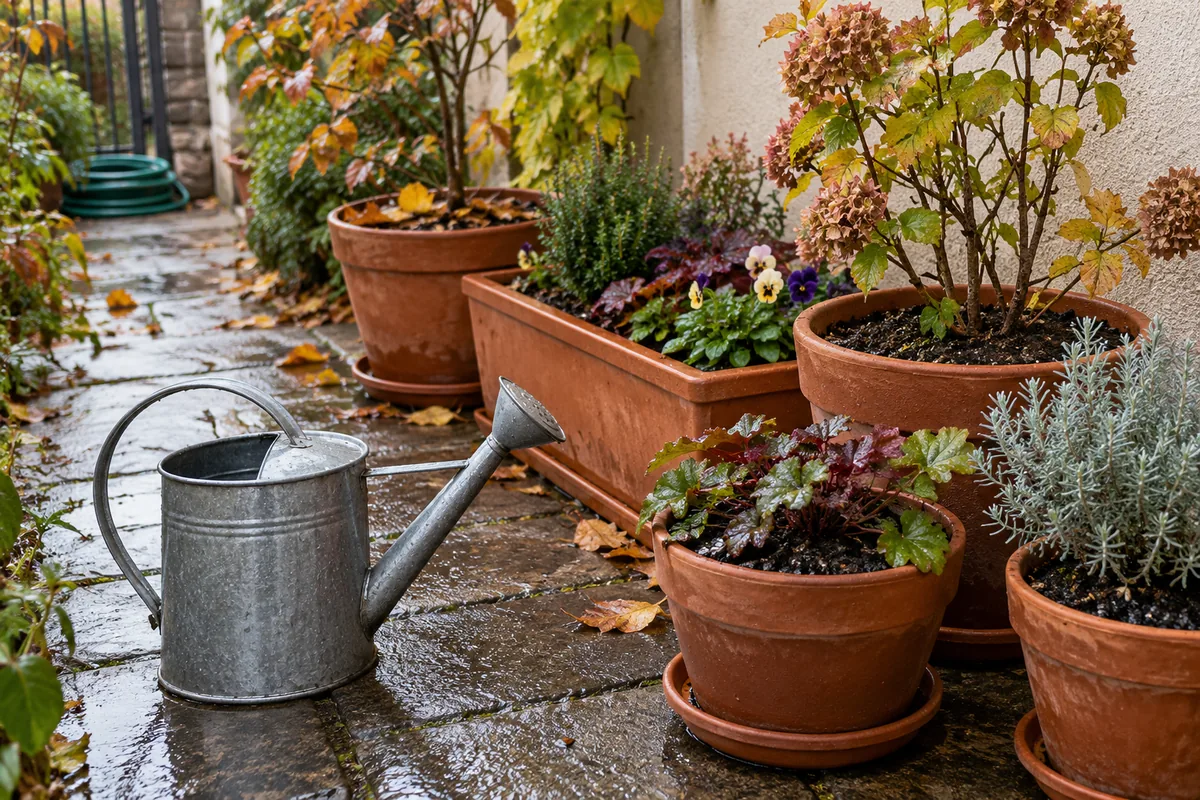
For a few containers, a small watering can with a long spout offers better control than a large, heavy can. It lets you direct water to the potting mix instead of splashing foliage or the surrounding floor. Fill it to a weight you can carry comfortably with one hand while supporting it with the other when necessary. A removable rose attachment is useful when you want a gentler shower over newly planted areas.
Containers can dry at different rates even when they sit side by side. Check the mix itself instead of following a rigid calendar: feel below the surface where practical, notice the pot's weight and observe the plant. Make sure drainage holes remain open and empty standing water from decorative outer pots when it would leave roots sitting wet. Adjust for rainfall, temperature and the needs of each plant.
A pair of close-fitting gloves helps with rough pots, soil and cleanup, while a kneeling pad can make low work more comfortable. Gloves do not make every thorn, splinter or sharp edge safe, so choose protection for the actual task. Wash hands after handling soil, and keep cuts covered.
Clean, dry and store the kit after each session
A simple end-of-session routine protects the tools you already own. Brush off loose soil before it dries into a thick layer. Wipe metal parts with a damp cloth when needed, then dry them thoroughly. Follow the manufacturer's care instructions for coatings, moving joints and blade maintenance; products and materials vary, so avoid applying a treatment simply because it works on a different tool.
Inspect handles for cracks, loose heads and rough edges. Check pruner blades for damage and keep them locked while stored. Sharpening changes the cutting edge, so use the angle and method specified for that tool or have it serviced if you are unsure. Never run a finger along a blade to judge sharpness.
Store tools where they are dry, visible and difficult for children to reach. A peg rail keeps edges separated, while a shallow tray catches soil during cleaning. If space is extremely limited, a lidded box can work as long as every tool is clean and fully dry before it goes inside. The best small-garden kit is the one you can find, carry and maintain without turning storage into another project.
Frequently Asked Questions
What gardening tool should a beginner buy first?
For container or raised-bed gardening, a comfortable hand trowel usually covers the widest range of planting and soil-moving tasks.
Do I need both a trowel and a hand cultivator?
Not always. Start with a trowel; add a cultivator if you regularly loosen surface soil or mix amendments into open beds.
Are bypass pruners suitable for every branch?
No. Stay within the manufacturer's stated cutting capacity and use a tool designed for thicker material when necessary.
How should I store garden tools for winter?
Remove soil, dry every part, inspect for damage, lock cutting tools and store the kit in a dry, secure place according to each maker's care instructions.
 Pressed Flower Frame DIY: Dry and Arrange a Botanical Display
 Warm Lighting Ideas for a Cozy Burrowcore Home
 17 Kitchen Witch & Herbal Apothecary Ideas That Make a Kitchen Feel Magical