 by Ecrin Labs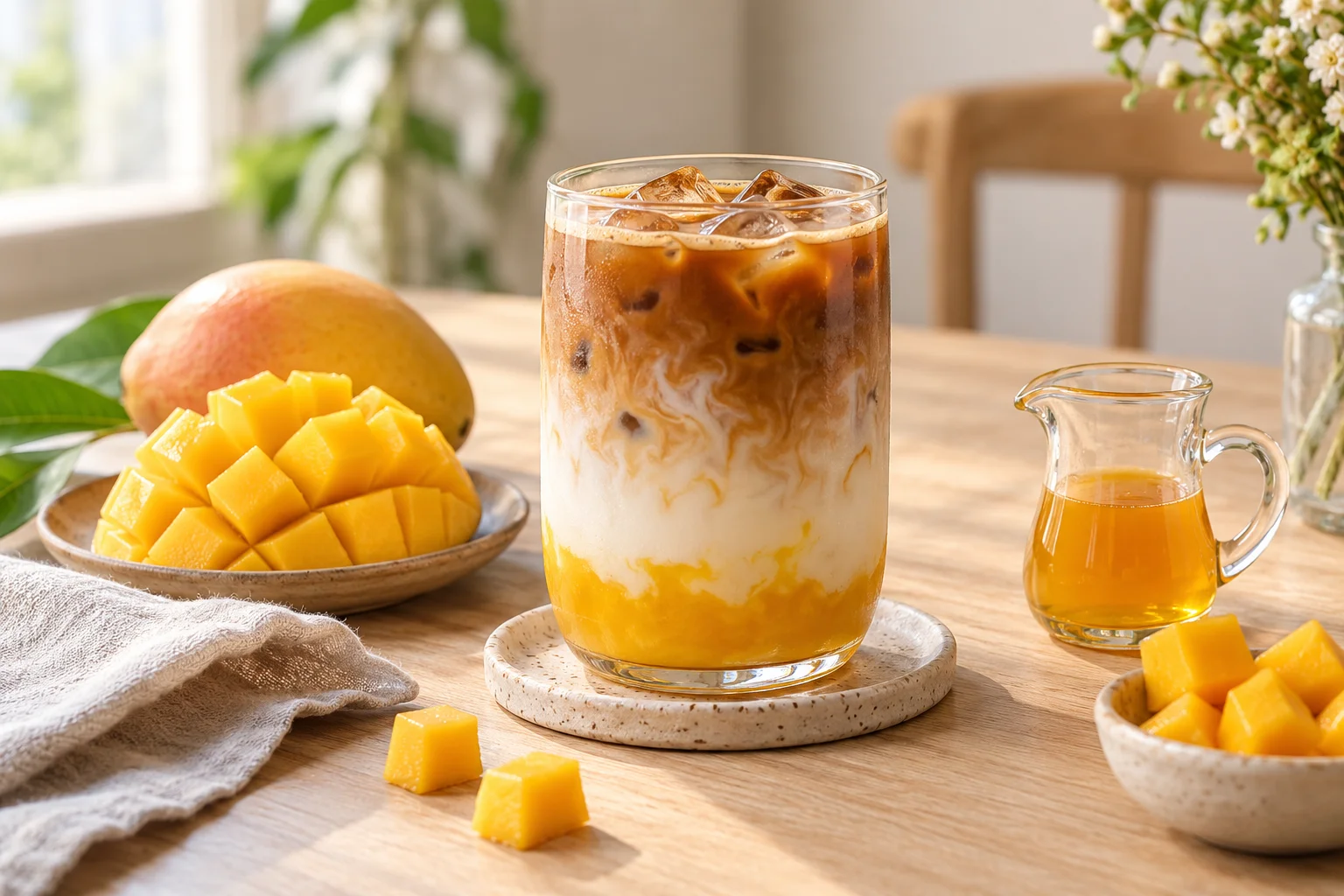
Mango iced coffee is easier to control with a strained fruit syrup than with thick purée stirred straight into a latte. This original small-batch recipe puts a modest mango accent beneath strong coffee and milk. Start with less syrup, taste after stirring and add more only if the fruit needs emphasis.
Make a small mango syrup
Use 100 g ripe mango flesh, 60 g granulated sugar and 80 ml water. Dice the mango and combine it with the sugar and water in a small saucepan. Use fragrant ripe fruit rather than a firm sour mango, which will give a different balance.
Warm gently, stirring until the sugar dissolves, then simmer softly for about 5–7 minutes. Mash the fruit lightly with a spoon as it softens. The goal is an infusion that can be strained, not a thick jam.
Strain and cool
Take the pan off the heat and let the mixture steep for about 10 minutes. Pass it through a fine strainer into a clean heat-safe container. Avoid forcing lots of pulp through if you want a smoother latte. Yield will vary with the fruit and simmering.
Cool before using it in an iced drink. If the syrup is too thick, stir in a little hot water while it is still warm. A naturally cloudy fruit syrup is normal; it will not look exactly like a clear commercial flavoring.
Build one mango latte
Mix 1 tablespoon cooled syrup with 30–60 ml espresso or 60 ml concentrated brewed coffee. Fill a glass with ice, add 150–180 ml milk and pour in the coffee mixture. Stir thoroughly before tasting.
Try a coffee with chocolate or caramel notes first so the fruit remains an accent. Add another teaspoon of syrup if desired. More mango is not always better: a heavy fruit layer can make the coffee taste weak or turn the drink into a dessert.
Try two alternatives
For a mango cold brew, combine 1 tablespoon syrup with 150 ml cold brew over ice and add a splash of milk to taste. For a dairy-free latte, use an unsweetened plant-based milk that you already enjoy with coffee.
Fruit acidity and milk formulations differ, so test a small serving before preparing several glasses. Do not add acidic fruit juice to hot milk for this recipe. If the texture separates, choose the cold brew version without milk rather than trying to hide the change beneath a topping.
Store carefully and troubleshoot
Transfer unused cooled syrup to a clean container and refrigerate promptly. This recipe is not a shelf-stable preserve and does not establish a tested storage life. Make a modest quantity and use clean utensils each time.
If the drink tastes watery, strengthen the coffee or reduce melting ice. If the fruit is faint, choose a more fragrant mango for the next batch rather than loading in extra sugar. The generated image is a serving concept; natural syrup color varies by mango variety.
Frequently Asked Questions
Can I use frozen mango?
Yes. Thaw it and use 100 g of the fruit for the small syrup batch; its flavor and water content may change the result.
Can I use mango purée instead?
You can make a thicker drink that way, but this recipe strains the fruit to keep the latte smoother.
Is the syrup shelf-stable?
No. Refrigerate the cooled syrup promptly; this original recipe does not establish a tested storage life.
 Marshmallow Cold Foam: A Small-Batch Coffee Topping
 Cookies and Cream Latte: An Iced Coffee Recipe
 Carrot Cake Latte: A Warm Spiced Coffee Recipe