 by Ecrin Labs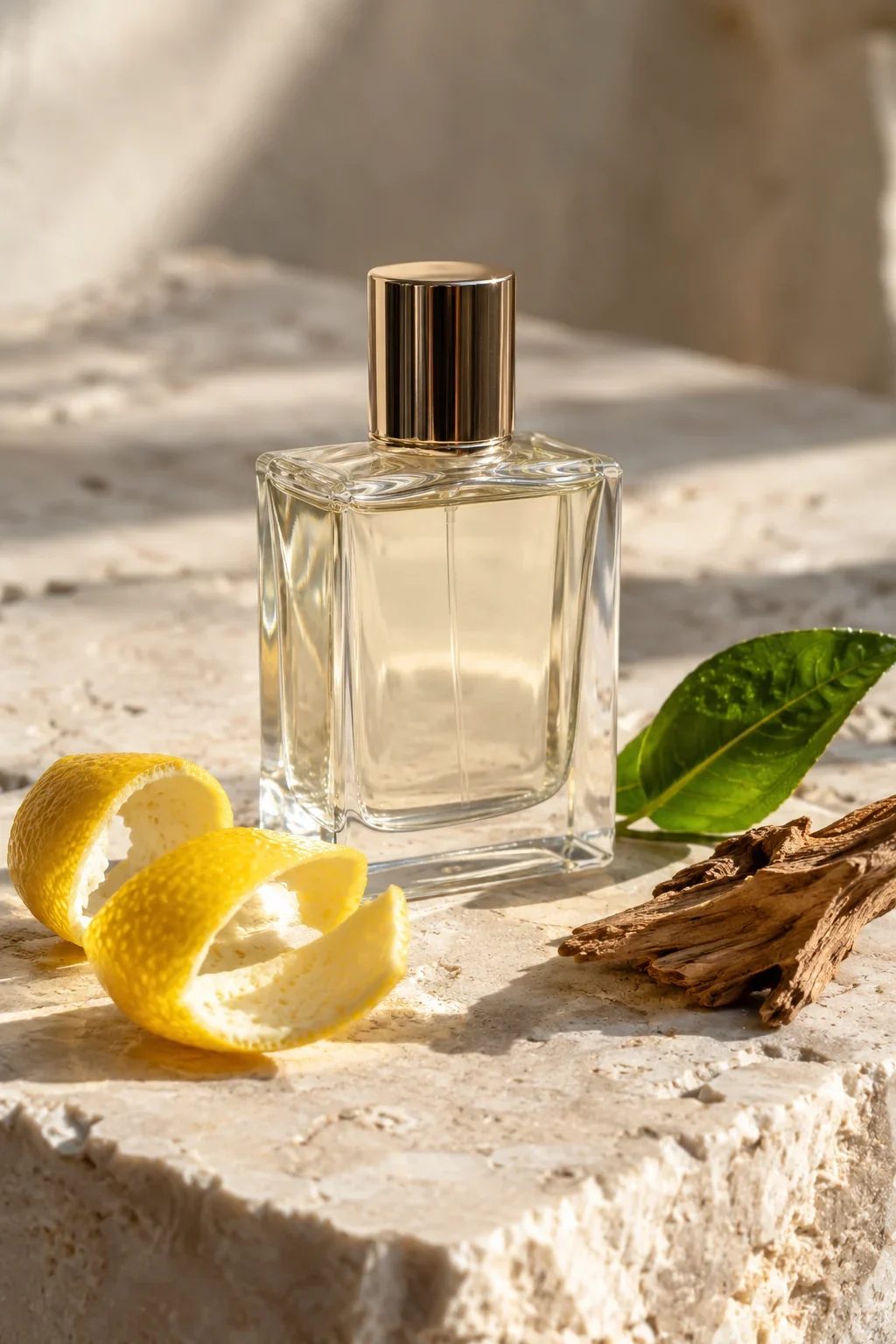
Fragrance notes describe perceived smells and creative impressions. A lemon, cedar or floral note does not necessarily mean that the named material is present as a literal ingredient. Notes are a guide to the experience, not a complete formula.
A useful testing journal records what you actually notice, even when it differs from the description. You do not need a trained vocabulary to recognize which fragrances you enjoy wearing.
Use note lists as a starting map
Read a list for its broad direction: bright citrus, green freshness, dry woods, soft florals or sweet warmth. These descriptions can help you choose samples, but they cannot fully communicate a fragrance’s balance. Two perfumes with overlapping notes can smell quite different.
The lemon peel and wood in the illustration are scent metaphors. They do not establish ingredients, sourcing or any property of a particular perfume.
Notice change without timing a pyramid
Top, heart and base are common ways to discuss a fragrance’s development. They are not three sealed compartments that switch at exact times. Some impressions overlap, persist or become more noticeable as others soften.
Write down an early impression and revisit it later in your normal day. You can record the actual time for consistency, but avoid deciding that a fragrance has “failed” because it does not follow a rigid online timeline.

Keep a short, repeatable journal
For each wear, record the fragrance name, date, application location, approximate amount and the setting. Add three plain-language observations: first impression, later impression and whether you wanted to smell it again. Finish with repeat, revisit or pass.
Use the same fields each time. “Soft woody scent; pleasant at my desk; became sweeter later; repeat” is more useful than a long list of impressive adjectives you are unsure about.
Separate paper impressions from skin wear
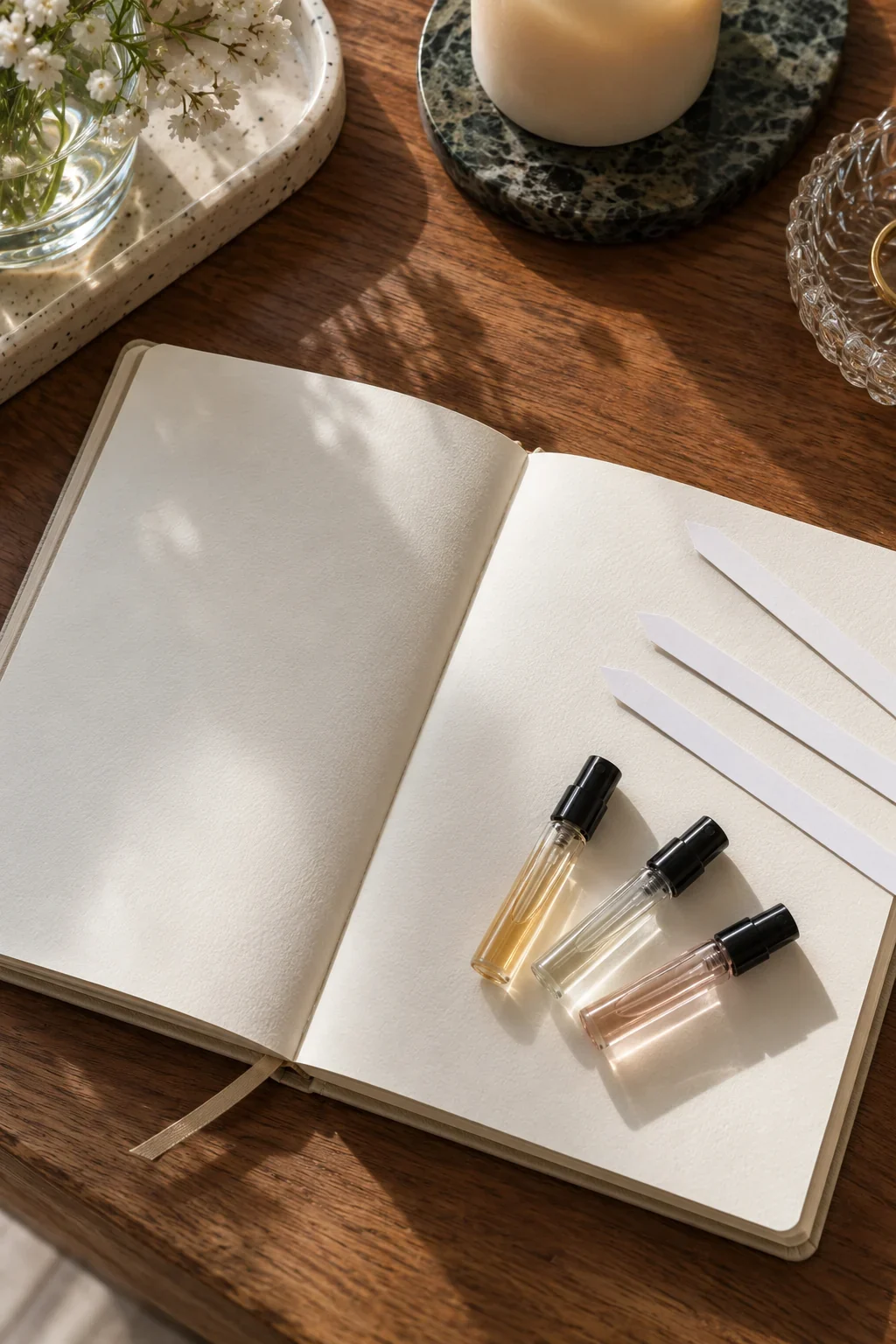
Blotters help you sort samples without applying all of them to your skin. Label each strip and keep them apart. For a wearable fragrance, follow its application instructions when you move to a skin trial; avoid irritated skin and stop if discomfort occurs.
Paper testing and wearing are different contexts. Record which you used, and do not assume that an enjoyable blotter result settles how the fragrance will feel throughout your day.
Compare patterns across several wears
Revisit favorites on separate days before buying. Look for repeated enjoyment, settings where the scent works and moments when it feels distracting. Note whether you are judging the fragrance itself or the excitement of trying something new.
Your notes need not match someone else’s review. If you like a scent but cannot name a single advertised note, that is still useful evidence for your own decision. Keep the final shortlist small enough to compare meaningfully.
Frequently Asked Questions
Are fragrance notes an ingredient list?
No. Notes describe olfactory impressions. Consult the product’s actual ingredient information for listed ingredients.
Do base notes appear at an exact time?
No. The pyramid is a descriptive model; impressions can overlap and develop differently across fragrances and wearing conditions.
What if I cannot identify the advertised notes?
Record familiar descriptions and your level of enjoyment instead. A personal journal is useful without specialist terminology.
 How to Choose a Perfume Discovery Set You Will Actually Use
 Build a Small Fragrance Wardrobe for Everyday, Work and Evening