 by Ecrin Labs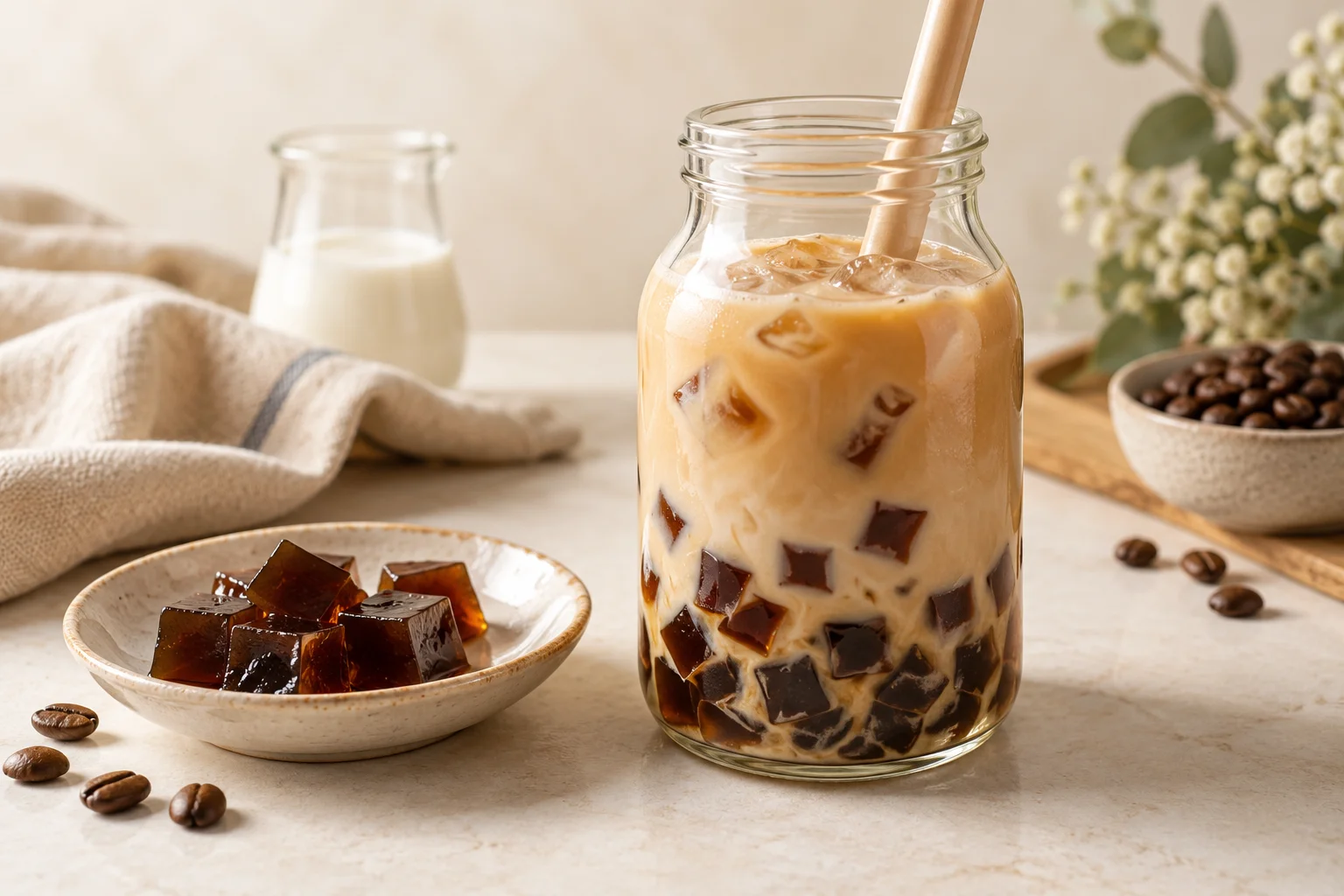
Coffee jelly adds a soft, spoonable texture to chilled milk coffee. Making the jelly separately allows you to control cube size and avoid turning a drink into a firm dessert.
This guide uses package-directed gelatin rather than assuming every brand sets identically. Wide-mouth jars make preparation, serving and washing easier than a narrow decorative bottle.
Coffee jelly ingredients and equipment
For four small drinks, start with 500 ml brewed coffee, 25–40 g sugar and enough powdered gelatin to set 500 ml liquid softly, according to your brand's directions. Many gelatin products use roughly 7 g for this volume, but bloom strength varies: the package is the controlling guide.
You need a shallow heat-safe container, small bowl for blooming gelatin and wide-mouth serving jars. For each drink, plan on 3–4 tablespoons jelly cubes, 150 ml cold milk and 60 ml cooled strong coffee. A regular narrow bottle neck is awkward for adding, eating and cleaning out jelly.
Set a soft coffee jelly
Measure cold liquid for blooming from the 500 ml total, using the amount the gelatin package requests. Sprinkle the gelatin over it and let it hydrate for the stated time. Warm the remaining coffee with sugar until the sugar dissolves, then remove it from the heat.
Stir the bloomed gelatin into the warm coffee until fully dissolved; do not vigorously boil it. Pour into the shallow container, cool briefly and refrigerate until set, usually several hours. Cut a small test piece before assembling drinks. You want tender cubes rather than a firm gummy slab.
Assemble the milk coffee drink
Cut the jelly into small cubes, around 5–8 mm across, and spoon 3–4 tablespoons into a clean wide-mouth jar. Add 150 ml cold milk and 60 ml cooled strong coffee. Taste before adding extra sweetener, since the jelly already contains sugar.
Serve with a spoon or a suitable wide straw, keeping the cubes small enough to move comfortably. A spoon is often simpler and avoids needing to suck firmly through a straw. This jelly drink is designed for adults; do not serve loose jelly cubes to young children.
Choose your sweetness and texture
For a dessert-like version, replace a small portion of the milk with sweetened condensed milk and reduce other sweeteners. For a lighter flavor, use plain milk and the lower sugar amount in the jelly. Decaf coffee works for both the jelly and the liquid base.
If the cubes are too firm, use less gelatin within the manufacturer's guidance next time; do not dilute a finished jar and expect the texture to reset evenly. If the jelly fails to set, check the quantity, bloom time and dissolution step before adding more powder.
Gelatin alternatives and serving ahead
Agar can make coffee jelly, but it is not a one-for-one substitute for gelatin. It normally requires a different heating process and produces a more brittle texture. Follow the specific agar manufacturer's liquid ratio and setting instructions rather than using the gelatin method unchanged.
Keep the jelly and milk mixture refrigerated and assemble the drinks near serving time. Wash bottles and jars carefully, including rims and lids. This recipe is not suitable for shelf-stable bottling. The image is an AI-generated serving illustration, and the exact cube size and color depend on your ingredients.
Frequently Asked Questions
Can I replace gelatin with agar?
Yes, but the quantity and heating method differ. Follow your agar product's directions rather than substituting it one for one.
Why use a wide-mouth jar?
It is easier to add cubes, use a spoon and wash the container properly.
Can I leave the bottled drink unrefrigerated?
No. This is a chilled dairy-style drink, not a shelf-stable bottled product.
 12 Coffee Station Ideas for a Small-Space Party
 Banana Syrup for Coffee: A Small-Batch Recipe and 5 Drink Ideas
 21 Home Café Ideas & Coffee Recipes That Make Mornings Feel Like a Coffee Shop