 by Ecrin Labs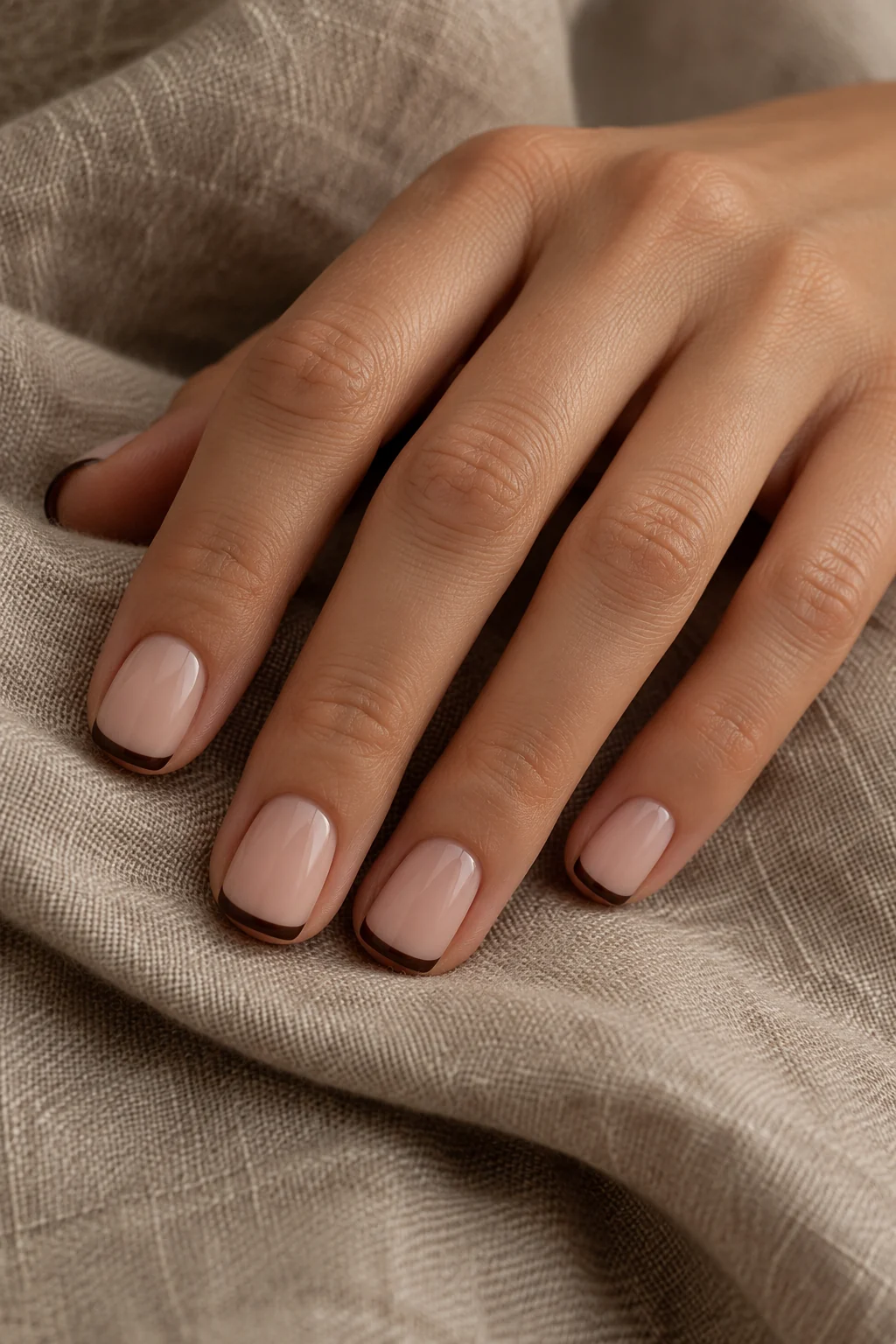
Brown French tips change character with the undertone and the width of the smile line. Espresso creates a sharper contrast, caramel feels softer, and a milk-chocolate shade bridges the two. Start with a sheer base that works with your own skin tone rather than trying to copy a single universal nude.
Three illustrated looks open the guide, followed by nine variations to discuss with a nail artist or try with ordinary polish. Keep the line proportions consistent across the hand; the design does not need a long extension to look polished.
1. Espresso micro tips on short nails
Follow the natural free edge with a thin espresso line. Keep the band slightly narrower at the sides to avoid a blocky finish. A rounded-square shape and sheer pink-beige base make this an easy everyday interpretation.
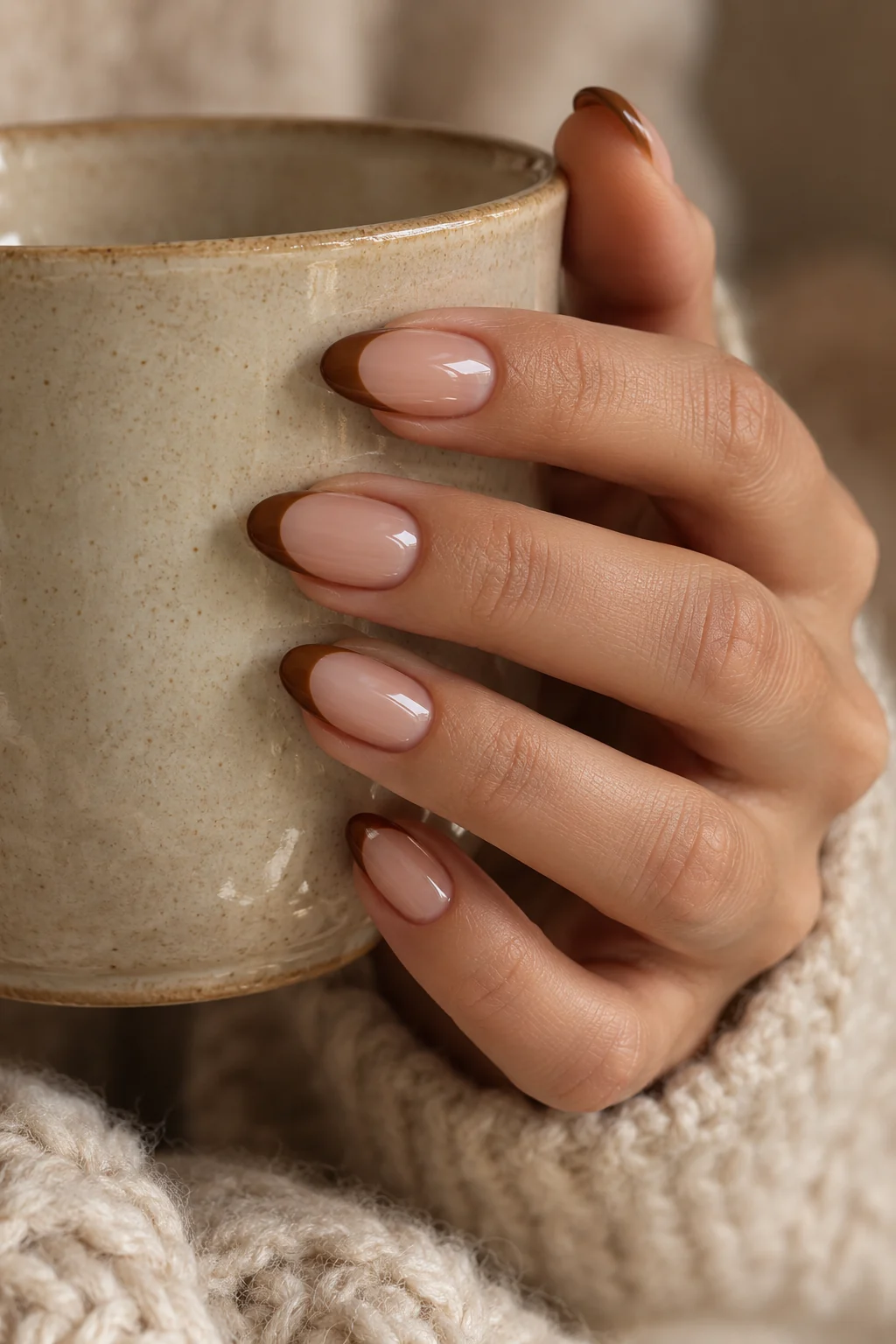
2. Caramel tips on almond nails
Use a warm caramel shade and a softly curved smile line. Leave enough nude area visible for the color to read as a tip rather than a half-painted nail. Keep the almond point rounded and balanced across the set.
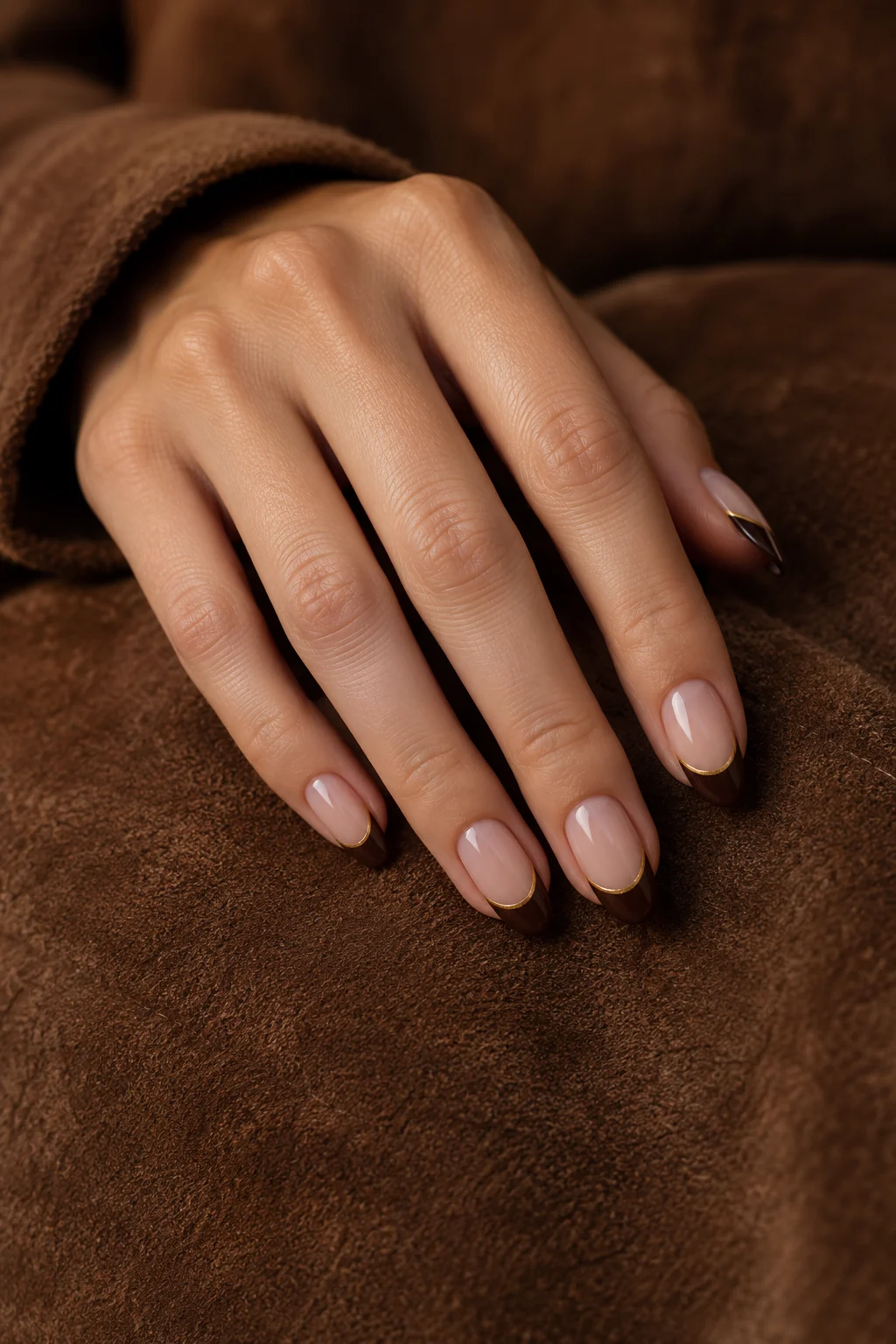
3. Chocolate with a fine gold outline
Paint the chocolate tip first and let it dry, then trace a hairline gold accent along its inner curve. The metallic line should separate the colors rather than dominate them. One accent nail is enough if you prefer a quieter version.
4. A matte cocoa finish
Choose cocoa tips and a compatible matte top coat. Test the finish because a matte layer changes how dark the brown appears. Keep the shape simple so the texture becomes the main detail.
5. Alternating brown shades
Use espresso, cocoa and caramel across the hand while keeping the tip shape identical. Arrange the shades intentionally from light to dark. Too many different line widths can make a restrained palette look busy.
6. A diagonal mocha French
Sweep mocha from one side of the free edge toward the opposite corner. Repeat the direction on each hand in a mirrored arrangement. This can make a short nail feel more graphic without adding length.
7. A double brown smile line
Paint a narrow tip, then add a second fine curve just below it. Leave a slim nude gap between the two. This needs a steady liner brush, so simplify to one accent nail if the available space is small.
8. Cream and espresso pairing
Use espresso French tips on most nails and one cream solid accent. Match the warmth of the cream to the base color. Keep that accent free of additional patterns so it supports the manicure rather than competing with it.
9. A soft rounded cocoa tip
Follow an oval free edge with a medium-width cocoa band. Avoid pulling the corners too far down the sides. This is a softer alternative to a deep, sharply pointed salon French.
10. A brown side outline
Keep the tip narrow and extend the color slightly down one side of the nail. Stop before the cuticle. The small extension makes the design asymmetrical while preserving the sheer base.
11. A tiny dot beneath the tip
Add one small brown dot below the smile line on a ring finger. Center it carefully and leave the other nails plain. Repeating the same polish means no extra palette decisions are needed.
12. A translucent toffee tip
Choose a sheer brown polish and build a light tint at the free edge with thin layers. The effect is softer than an opaque stripe. Let each coat dry before adding the next to avoid ridges at the smile line.
Frequently Asked Questions
Which brown works best on short nails?
Any brown can work, but a thin tip leaves more of the nail visible. Espresso gives contrast; caramel makes the edge feel softer.
Can I use French-tip guides?
Yes, with ordinary polish if the base is fully dry. Remove the guide carefully according to its directions and finish with a compatible top coat.
Should every nail use the same shade?
A single shade looks cohesive, while a limited three-brown palette adds variation. Keep the shape and width consistent either way.
 15 Minimal Halloween Nail Ideas for a Subtle October Manicure
 12 Plaid Nail Designs for Autumn in Burgundy, Brown and Green
 12 Deer Print Nail Ideas in Brown, Cream and Caramel