 by Ecrin Labs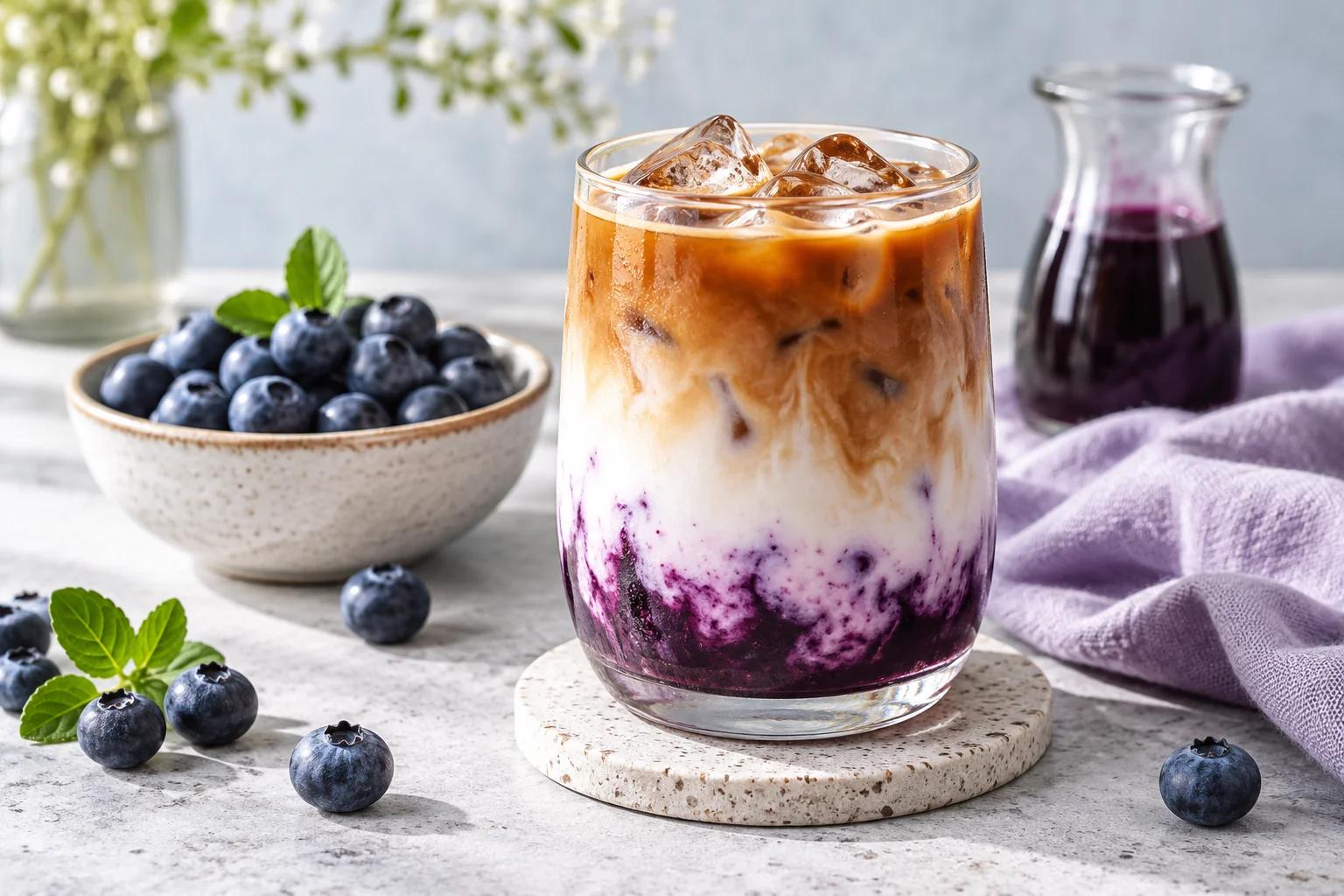
Blueberry coffee combines a fruity syrup with the familiar structure of a latte. The useful challenge is balancing berry acidity, milk and coffee rather than simply making the glass purple.
This guide gives a small-batch syrup and both chilled and warm serving methods. Ingredient behavior varies, so make a small trial glass before multiplying the recipe for guests.
Blueberry syrup ingredients
For a small batch, combine 150 g blueberries (about 1 US cup), 100 g sugar (½ cup) and 120 ml water (½ cup). Fresh or frozen berries work; use frozen berries directly without thawing. Keep lemon juice out of the latte base, since additional acidity can encourage milk to separate.
For each iced latte, plan on 1–2 tablespoons syrup, 30–60 ml espresso, 180 ml milk and a glass of ice. Blueberries vary in sweetness and acidity, so begin with the smaller amount of syrup. This is an original recipe concept; the illustration shows a serving suggestion rather than a tested color guarantee.
Make and strain the blueberry syrup
Put the berries, sugar and water in a small saucepan. Heat gently until the sugar dissolves, then simmer for about 8–10 minutes. Stir and lightly crush a few berries to release their juice; do not boil the mixture down to jam.
Remove from the heat and strain into a heat-safe container. Press lightly for a deeper flavor, or let it drain without pressing for a clearer syrup. Cool fully before assembling an iced latte. A few flecks of berry are harmless to the appearance, but a fine strainer makes a smoother drink.
Make the iced blueberry latte
Stir 1 tablespoon cooled syrup into 180 ml cold milk in a glass. Add ice, then pour 30–60 ml espresso over it. Stir again before drinking. If you want to photograph a layered glass, add the syrup first and pour the milk gently over the ice; expect the layers to blend during serving.
Try a small spoonful of syrup mixed with milk before making the full drink. If the milk separates, the syrup may be too acidic for that milk: use less syrup, try a different milk or enjoy it in black iced coffee instead. Do not use extra lemon juice to intensify the berry flavor.
Adapt the recipe for a hot latte
Warm 180 ml milk gently without boiling. Stir 1 tablespoon syrup into the espresso, then add the warm milk gradually. Because berries are acidic, start with a small amount and serve immediately. Very hot milk and concentrated fruit syrup are less forgiving than a chilled mixture.
For a gentler blueberry note, use less syrup and a slightly larger amount of milk. A medium coffee roast keeps the drink balanced, while a very dark roast can make the berry taste sharper. Decaf works with the same method if you prefer the flavor without regular espresso.
Adjust color, sweetness and serving style
A natural blueberry syrup may make the milk lavender, muted pink-purple or almost beige once coffee is added. Color depends on the berries, milk and strength of the coffee. Do not chase the picture by adding unnecessary sugar; taste is the better guide.
Serve with a few berries beside the glass rather than dropping whole fruit into a narrow straw. Refrigerate the cooled syrup in a clean container and make only what you plan to use soon. This is not a shelf-stable preparation and does not come with a validated storage period.
Frequently Asked Questions
Can I use frozen blueberries?
Yes. Add them directly to the saucepan; the syrup may need a little longer to reach a gentle simmer.
Why did my milk separate?
Fruit acidity, milk choice and heat can affect stability. Try less syrup and a chilled preparation, or use the syrup in black coffee.
Will the drink be bright purple?
Not necessarily. Natural berry color varies and coffee often makes it more muted. The image is a serving illustration.
 12 Coffee Station Ideas for a Small-Space Party
 Banana Syrup for Coffee: A Small-Batch Recipe and 5 Drink Ideas
 21 Home Café Ideas & Coffee Recipes That Make Mornings Feel Like a Coffee Shop